What to Expect During a Landlord Inspection: A Renter’s Guide

A landlord’s inspection is usually less about spotless rooms and more about keeping your home safe and in good repair. If you’re unsure what to expect during a landlord inspection, it’s understandable to wonder which rooms or belongings might be checked, whether everyday clutter could count against you, and how access should be arranged. A routine visit is generally a practical check-in, not a test of whether your home looks untouched.
This guide explains why inspections happen, what a landlord or letting agent may look at, and how a routine visit differs from a gas or electrical safety check. You’ll also find straightforward ways to prepare, understand notice and access, and report a repair or safety concern clearly. For renters in Liverpool, St Helens, Wigan, Manchester, Salford and Warrington, knowing the purpose of a visit can make the process feel more manageable. With clear communication and dedicated maintenance support, issues can be raised and followed up with less uncertainty.
Table of Contents
What to expect during a landlord inspection and why it happens
A routine landlord visit is generally about the property’s condition, maintenance and communication. It isn’t a demand for a spotless, staged home. You live there, so signs of everyday use are normal. The exact purpose and scope can vary with the property, tenancy and reason for the visit. The arrangements should give you a clear idea of what the appointment involves.
In practical terms, what to expect during a landlord inspection is usually a chance for the landlord or letting agent to look at the home’s general condition and discuss anything that may need attention. It doesn’t mean every visit follows the same checklist or that ordinary belongings will be treated as a problem.
Why a landlord or letting agent arranges a visit
A visit can help identify visible maintenance concerns before they become harder to manage. For example, an agent might notice a damp-looking patch, a dripping tap or damage to a door. These are observations, not diagnoses. The cause and any work needed may require a separate assessment.
A visit also gives you a straightforward opportunity to raise an unresolved repair. If you’ve already reported an issue, explain what has changed and when you first noticed it. A calm, specific account helps both sides understand what needs follow-up. Treat the visit as a practical check-in, not as evidence that the landlord assumes you’ve done something wrong.
For renters in Liverpool, St Helens and the wider region, a managed tenancy can provide a clear maintenance route and tenant liaison support. Nicholson Lettings has a dedicated maintenance team and a Tenant Liaison Officer. Clear communication helps separate an observation from a repair decision, so you know what has been noted and what happens next.
A routine inspection is not a move-in inventory
A routine inspection is an ongoing check of a property’s visible condition and maintenance needs; a check-in inventory records the property’s condition and contents at the start of a tenancy. The two serve different purposes. A routine visit takes place during the tenancy, while an inventory documents the starting condition. The records and process can differ between tenancies.
If you’re unsure which kind of appointment has been arranged, ask the landlord or agent to explain its purpose and what they plan to look at. Clarifying this can help you prepare without guessing or feeling that you need to make your home look unused. For a wider overview of the rights and responsibilities involved in renting, see Landlord-tenant law.
A home is lived in, not staged. You don’t need to hide signs of ordinary daily life. If you have a repair concern, make a note so you can raise it during the visit or through the usual maintenance reporting process.
What may be checked during a landlord inspection
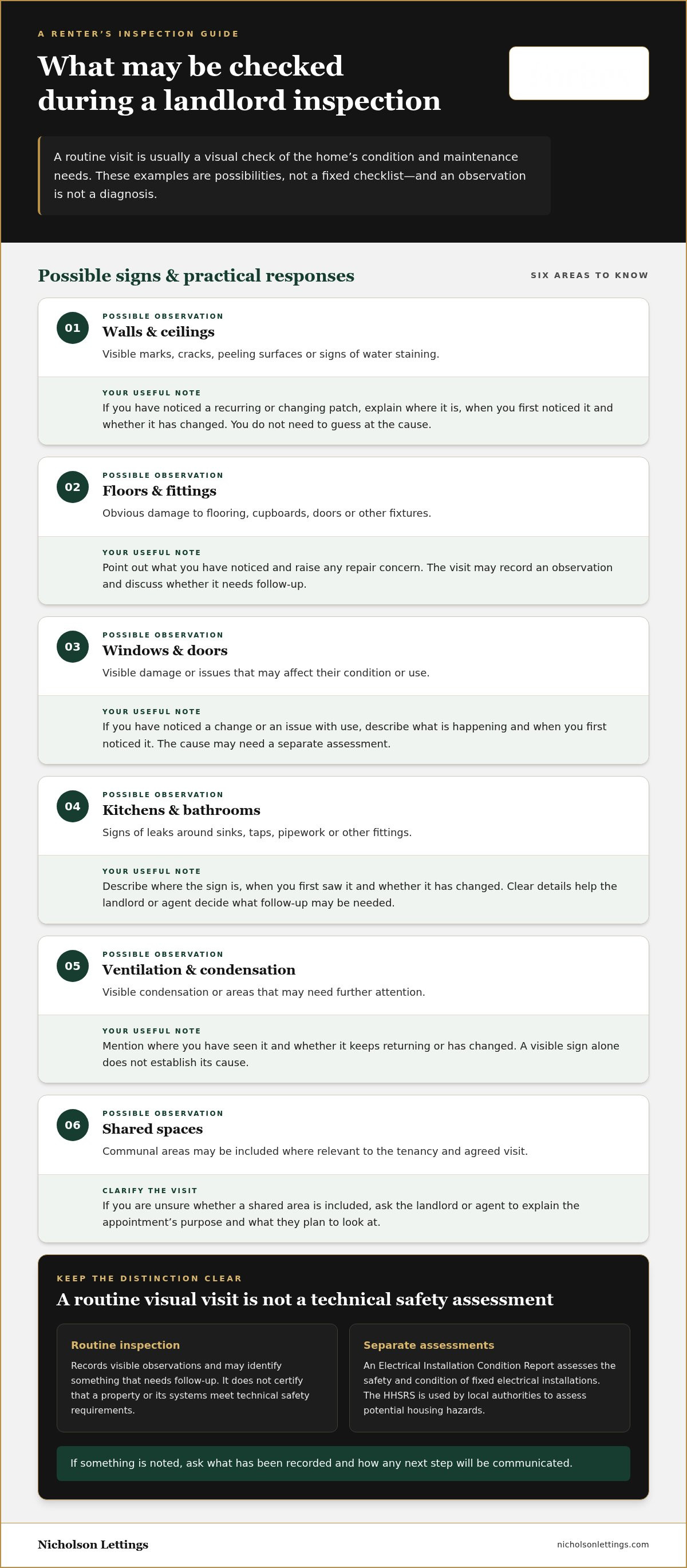
There isn’t one fixed checklist for every home. The visit’s purpose, the property and the arrangements made with you all affect what the landlord or letting agent looks at. The examples below are possibilities, not a guarantee that every item or room will be checked.
A routine visit is usually visual. The landlord or agent may look for signs that something needs attention, record the observation and discuss what should happen next. Seeing a mark or patch doesn’t, by itself, establish what caused it or who is responsible.
Walls and ceilings: visible marks, cracks, peeling surfaces or signs of water staining.
Floors and fittings: obvious damage to flooring, cupboards, doors or other fixtures.
Windows and doors: visible damage or issues that may affect their condition or use.
Kitchens and bathrooms: signs of leaks around sinks, taps, pipework or other fittings.
Ventilation and condensation: visible condensation or areas that may need further attention.
Shared spaces: where relevant to the tenancy and agreed visit, communal areas may also be included.
These examples help you picture the visit without turning it into a room-by-room test. Your belongings and furnishings are part of a lived-in home. If an area is difficult to access, or you’ve noticed a change such as a recurring damp-looking patch, explain that rather than guessing at the cause.
A routine inspection records visible observations; it doesn’t certify that a property or its systems meet technical safety requirements. If the visitor spots something that may involve a safety risk or need specialist attention, it may call for follow-up or a separate assessment. Ask what has been noted and how any next step will be communicated.
This distinction matters for electrical safety. An Electrical Installation Condition Report assesses the safety and condition of a property’s fixed electrical installation. A routine visual visit doesn’t replace that formal assessment or any required specialist check. Similarly, the HHSRS, or Housing Health and Safety Rating System, is used by local authorities to assess potential housing hazards. A landlord’s routine visit isn’t an HHSRS assessment.
If you spot a concern before or during the visit, describe where it is, when you first noticed it and whether it has changed. You don’t need to diagnose it. Clear details help the landlord or agent decide whether to record it, arrange further assessment or take another step. They also give you a clearer point of reference for follow-up.
A clear maintenance route can make it easier to raise a concern after an inspection. Nicholson Lettings provides dedicated maintenance support as part of its managed tenancies.
Access, privacy and inspection worries: what renters should understand
An inspection isn’t permission for a landlord or letting agent to enter whenever they choose. Your home is your private space, and property care needs to respect your privacy. Clear communication and respect for your privacy matter as much as checking the condition of a home. If you’re unsure what to expect during a landlord inspection, start by checking the visit details and your tenancy agreement rather than guessing.
For rented homes in England, current guidance generally says a landlord should give at least 24 hours’ written notice before an inspection and arrange it for a reasonable time. The right to quiet enjoyment protects your ability to live in your home without unreasonable interference. These points don’t amount to unrestricted access, and the exact position can depend on the circumstances. Check current official England guidance if you need to understand how it applies to you.
What to clarify before the visit
Read the message or letter about the visit alongside your tenancy agreement. Check the proposed date and time, the stated purpose, and who plans to attend. If these details aren’t clear, ask for clarification before the appointment so you can make practical arrangements.
Raise access concerns promptly. You may need to discuss work commitments, caring responsibilities or another appointment. Keep the exchange clear and polite, and save messages so you can refer back to the agreed arrangements. If you’re uncertain about notice or access rights, use current official guidance for England rather than relying on assumptions or outdated advice.
If you feel uncomfortable or cannot make the appointment
Respond as soon as you can. Explain the practical issue and, if needed, suggest an alternative date or time. A clear proposal gives the landlord or agent something specific to respond to and helps avoid a misunderstanding about whether you’ve seen the notice.
If you feel uneasy about who is attending or why, say so in writing and ask for the purpose to be explained. Keep the message factual: for example, explain that you can’t be home at the proposed time and offer a suitable alternative. You can also ask whether you need to be present. A tenant’s presence isn’t always required, but you can express a preference and discuss a workable arrangement.
Keep a record of your message and any reply, including the new date or agreed next step. If the issue remains unclear, check the tenancy terms and current official guidance before deciding how to respond. Avoid leaving a message unanswered. Timely communication makes it easier to resolve practical concerns and keep a clear record of what has been agreed.
How to prepare for a landlord inspection without unnecessary stress
A little preparation can make a visit feel more straightforward, but you don’t need to stage your home or hide everyday signs of use. Focus on understanding the arrangements and making it easy to discuss anything that needs attention. If you’re wondering what to expect during a landlord inspection, these four steps can help you feel ready without turning the appointment into a major task.
Review the arrangements. Check the proposed date, time and stated purpose, along with any rooms or areas mentioned in the visit communication. If something is unclear or the appointment clashes with a practical commitment, raise it promptly with the landlord or letting agent.
Note any repairs or changes. Write down what you’ve noticed, where it is and when it began. Include whether it has changed and any steps you’ve already taken, such as reporting it or moving belongings away from the affected area. This gives you a clear account to refer to rather than relying on memory during the visit.
Clear access where practical. Make relevant fixtures or areas reasonably accessible if they’re part of the stated arrangements. You don’t need to move heavy or unsafe items or reorganise the whole home. Ordinary household tidiness is different from concealing a leak, damage or another maintenance concern.
Prepare questions. Note anything you want to ask, such as whether an observation will be recorded, who will follow up, or how to report a repair afterwards. A short list helps you cover the points that matter, especially if you’re balancing the visit with work or other commitments.
Before the inspection: a short practical checklist
Keep your notes and the appointment message handy. If a particular room or fixture is mentioned, make sure it can be seen where it’s safe and practical. You don’t need to guess at causes or carry out repairs yourself. A clear description of the issue is more useful than an attempted diagnosis.
If you’ve already contacted the agent about a concern, note when you did so and any reply or action since. This can help connect the inspection conversation with the existing repair history. For practical ideas on looking after a managed home, Nicholson Lettings shares a guide to dedicated property maintenance.
During the visit: communicate clearly
Explain issues in plain, factual terms. For example, say when you first noticed a mark or that a leak appears to have changed, rather than trying to decide what caused it. If the visitor notes a concern, ask what will happen next and how you’ll hear about any follow-up. Keep a record of agreed actions and later messages so you have a clear reference.
Preparation is about making communication easier, not presenting a perfect home. In a managed tenancy, a clear maintenance route can help you raise concerns. Explore Nicholson Lettings’ managed rental support.
After the inspection: reports, repairs and local support
A visit doesn’t always lead to repair work. The landlord or letting agent may record an observation for follow-up, arrange a further assessment, or decide no action is needed. If you’re unsure what to expect during a landlord inspection once the visit is over, ask what any comments mean and whether they require a next step. This helps distinguish a note made during the visit from a confirmed repair decision.
If something has been noted, find out what was recorded, who will arrange the next step and how you’ll receive an update. Clarify whether you need to do anything and when it would be sensible to follow up. A clear explanation of the process can help you understand what happens next, even if the repair itself needs further assessment.
What to do if the visit identifies a repair
Make a brief note of the concern and the response you were given. If the issue is still present or gets worse, report the change through your usual tenancy communication route, even if you discussed it during the visit. Include where it is, when you first noticed it and what has changed. A written report gives you a useful record to refer to.
Ask who is handling the next step and how you’ll be kept informed. If you’re given a timescale, note it down. If it passes or the issue changes, send a clear follow-up referring to your earlier message.
If the situation needs urgent attention because of a serious fault or risk, follow the emergency reporting instructions provided for your tenancy. For other concerns, a clear written report can help keep the follow-up process organised.
How managed support can make follow-up clearer
In a managed tenancy, a maintenance contact can help coordinate repair follow-up, while a Tenant Liaison Officer can help clarify communication and next steps. Nicholson Lettings coordinates managed property safety checks and provides dedicated maintenance support. Ask who is handling your concern and how updates will be shared.
Landlords looking at the management process can find a different perspective in Nicholson Lettings’ landlord’s guide to property management.
Keep any notes and messages together in case the issue needs further attention. If you’re looking for a managed home in Liverpool or the wider region, explore Nicholson Lettings’ managed rental support and learn about the support behind its furnished homes.
Make future visits easier with clear communication
Knowing what to expect during a landlord inspection can help you approach future visits with more confidence. If an arrangement is unclear, ask for the details you need. If a concern is raised, keep a note of what was discussed and any agreed next step. You don’t need to have every answer straight away. Clear communication helps you understand what happens next and gives you a useful record to refer to.
If you’re planning your next move in Liverpool, St Helens, Wigan, Manchester, Salford or Warrington, consider what would make day-to-day renting more comfortable, from a furnished home to a clear process for raising questions.
Explore Nicholson Lettings’ managed rental support to find a home that fits your needs. With furnished homes, dedicated maintenance support and a clear route for communication, you can focus on settling in.
Frequently Asked Questions
Can a landlord inspect a property without the tenant being present?
Yes. In England, you generally don’t have to be at home if the landlord has given proper written notice and arranged the visit appropriately. If you’d rather be present, say so promptly and discuss a suitable time. Knowing what to expect during a landlord inspection can help you decide whether to attend or make another practical arrangement, especially if you share the home with other people.
How much notice should a landlord give before an inspection?
In England, the general requirement is at least 24 hours’ written notice before a landlord enters to inspect the property. The visit should also be arranged for a reasonable time of day. Check the message carefully for the date, time and reason for entry. If any detail is missing or the proposed time causes a problem, reply in writing so there’s a clear record of what you’ve discussed.
Can I refuse a landlord inspection if the proposed time does not work?
If the appointment clashes with work, caring responsibilities or another commitment, respond promptly and suggest a practical alternative. Keep the exchange in writing and explain the issue clearly. Don’t ignore the arrangement or assume that declining one time ends the matter. The position can depend on the purpose of access and your tenancy circumstances, so check current official England guidance if you’re unsure how to respond.
Do I need to clean my home before a landlord inspection?
No special deep clean or staged presentation is needed for an ordinary visit. Focus on making any agreed areas accessible where practical, and don’t hide a fault behind furniture or stored items. For example, if you’ve noticed a mark near a window, point it out and explain when you first saw it. That gives the visitor useful context without making you responsible for diagnosing the cause.
Can a landlord take photographs during an inspection?
Photography isn’t automatic just because an inspection is taking place. If someone wants to take pictures, ask what they need to record and how the images will be used. You can also point out private documents, family photographs or personal belongings you don’t want included, and ask for the camera to focus only on the relevant property issue. If you’re uncomfortable, explain why and request a conversation about alternatives.
What happens if an inspection finds a repair problem?
The landlord or agent may record the issue, arrange a closer assessment, or decide no further action is needed. Ask who is responsible for the next step and how you’ll receive an update. If the fault continues or worsens, report the change through your usual tenancy channel and refer to your earlier message. For an urgent serious fault or risk, follow the emergency repair instructions provided for your tenancy.
Is a landlord inspection the same as a check-in inventory?
No. A check-in inventory is associated with recording a property’s condition and contents at the start of a tenancy; a routine inspection is a later visit during the tenancy. The documents used can differ between arrangements. If you’re comparing a new observation with an earlier record, check what paperwork you received at move-in and note any difference you want the landlord or agent to consider.