How to Reduce Void Periods in Rental Property with a Competitive Rent

A rental void is more than an empty calendar slot: it’s the time a property sits empty between tenancies while costs such as maintenance and the mortgage continue. You can’t eliminate void periods completely, but learning how to reduce void periods in a rental property starts with practical steps: keep a tenant pipeline active, set a competitive rent and prepare the home before it becomes vacant.
It’s understandable to focus on lost rent, especially when a property is ready for its next tenant but enquiries are slow. A clear, responsive letting process can help limit avoidable delays without rushing important decisions about the property or the people who will live there.
This guide explains how early marketing, flexible move-in arrangements, prompt maintenance and planned checks can help reduce gaps between tenancies. You’ll also learn why reviewing rent against local demand matters, and how to use a vacancy to prepare the property for its next residents.
Table of Contents
1. Tenant pipelines and move-in and move-out services
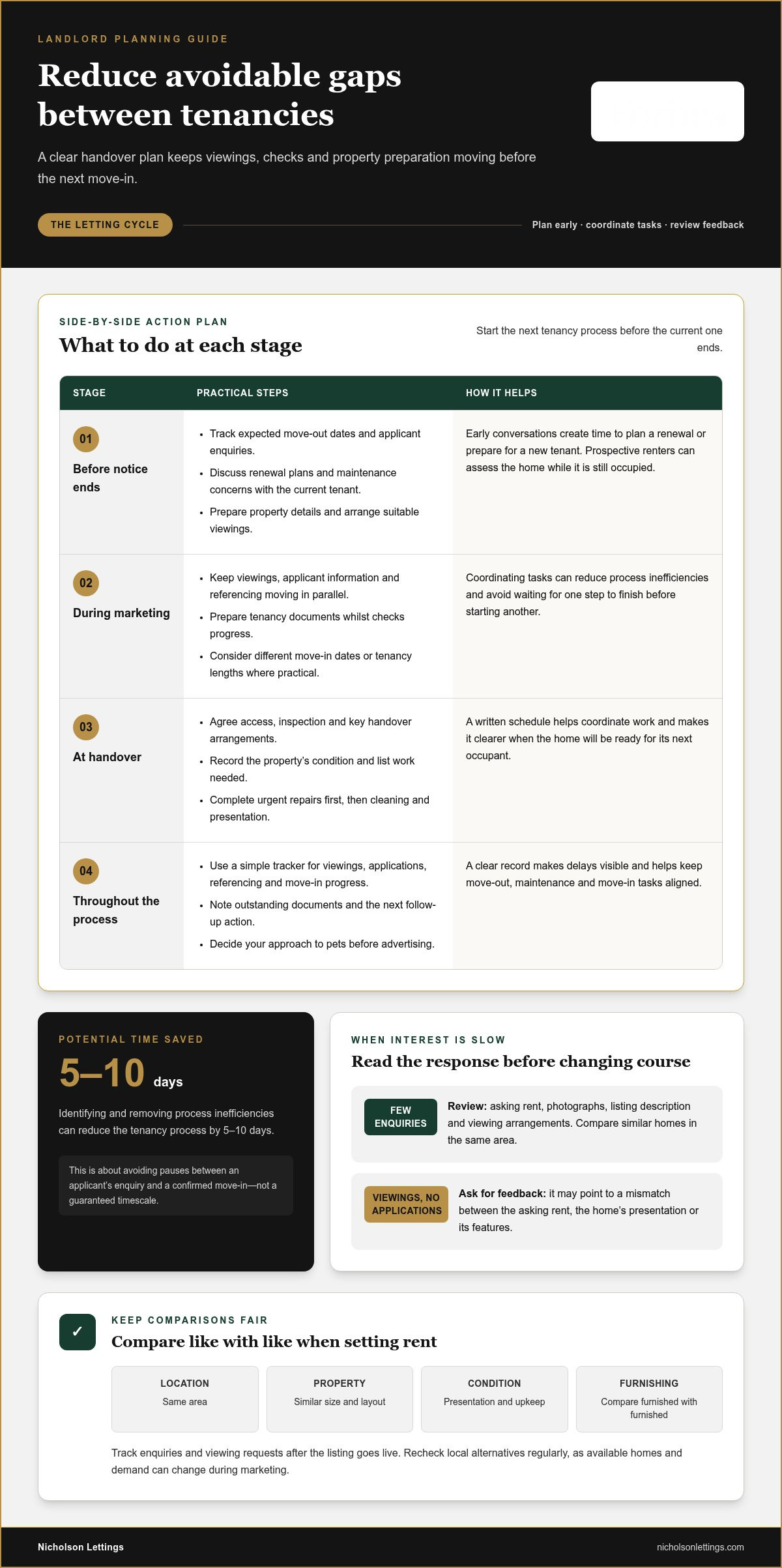
For landlords considering how to reduce void periods in rental property, plan the next tenancy before the current one ends. Keep a record of expected move-out dates, applicant enquiries and viewing arrangements. When a tenant gives notice, prepare the property details and arrange suitable viewings. This gives prospective tenants a chance to assess the home while it is still occupied.
Contact tenants before the tenancy ends to discuss their plans and any maintenance concerns. A reminder a couple of months beforehand can open a renewal conversation and give you time to plan. If the tenant wants to stay, discuss proposed changes clearly and address reported repairs. Retaining a suitable tenant avoids coordinating another move-in and can help maintain rental income.
Agree practical steps for a departing tenant, including access, inspections and key handover. Schedule the check-out inspection promptly, record the property’s condition and list the work needed before the next tenancy. Complete urgent repairs first, followed by cleaning and presentation. A written schedule helps coordinate tasks and shows when the home will be ready for its next occupant.
Keep referencing and tenancy preparation moving alongside viewings, rather than waiting for one task to finish before starting another. Request applicant information promptly and prepare tenancy documents whilst checks progress. Identifying and removing process inefficiencies can reduce the tenancy process by 5-10 days. This means fewer avoidable pauses between an applicant’s enquiry and a confirmed move-in.
Which tenant-finding methods and UK letting agents fill properties fastest, and what do they cost? For speed, look for a letting process that combines prompt online advertising, responsive enquiry handling, scheduled viewings and referencing started during the notice period. An agent’s pace depends on how well these steps are coordinated with local demand and applicant readiness.
Flexible arrangements can widen the pool of prospective tenants. For example, someone relocating for work may need a move-in date that differs from the outgoing tenant’s departure. Considering different start dates or tenancy lengths can help match more applicants to the property. Decide your approach to pets before advertising, as this can affect which renters consider the home.
In England, tenants under the Renters’ Rights Act have to give landlords two months’ notice before moving out, according to The National Archives (legislation.gov.uk). Use that notice period to discuss renewal, plan inspections and prepare the next tenancy. For landlords asking how to reduce void periods in rental property, coordinating these steps early can prevent avoidable gaps between tenancies.
Use a simple tracker to follow each applicant’s viewing, application, referencing and move-in progress. Note outstanding documents and the next follow-up action. This makes delays visible and helps keep move-out, maintenance and move-in tasks aligned. A clear record also shows which process steps need attention before the next tenancy cycle.
2. Setting a competitive rent
An asking rent that sits above comparable local homes can reduce enquiries and leave a property vacant longer. Void periods can vary, so use local demand and property type as context rather than relying on a single benchmark. Treat that figure as context, not a target: demand differs between neighbourhoods and property types. Compare current listings in the same area, focusing on homes with similar size, condition and furnishing.
Set a rent that reflects what renters can see and assess. A well-presented flat with working appliances may attract more interest than a similar home needing attention, but those details don’t automatically justify a higher asking rent. Compare the property’s condition, layout, transport links and included features with nearby alternatives. This gives you a sound basis for deciding whether the proposed rent matches local expectations.
Check the listing’s performance after it goes live. Track enquiries, viewing requests and feedback from prospective tenants. If comparable homes attract interest but yours receives few enquiries, review the rent alongside the photographs, description and viewing arrangements. If people view but don’t apply, ask what influenced their decision. Their feedback may reveal a mismatch between the asking rent and the home’s presentation or features.
Compare like with like, including location, property size, furnishing and condition.
Review local listings regularly, as the available alternatives can change during marketing.
Record enquiry and viewing patterns so you can identify where interest drops.
Use feedback to separate rent concerns from issues with the listing or property.
Avoid setting rent based only on what a property previously achieved. An older figure may not reflect current demand or the home’s condition today. Before each letting, reassess nearby listings and note meaningful differences. For example, compare a furnished apartment with other furnished homes, rather than using an unfurnished property as your only benchmark. A fair comparison makes your pricing decision more grounded.
Renting at a competitive level doesn’t mean automatically choosing the lowest figure. The aim is to attract suitable applicants while protecting rental income and keeping the property occupied. If you adjust the asking rent, update the listing promptly and make sure every advertised detail remains accurate. Clear information helps renters decide whether the home suits their needs and supports more productive viewings.
Review the rent and the property’s presentation before each marketing period. Check that appliances work, rooms are clean and photographs reflect the home as it stands. If the listing already describes these features accurately, focus on the rent and local comparisons. This joined-up review helps landlords make a considered adjustment rather than reacting to a quiet spell with an unsupported reduction.
3. Prompt maintenance and respectful communication
Responding promptly to a repair report can protect the property’s condition and a tenant’s confidence in their home. A leaking tap, for example, may seem minor, but leaving it unresolved can cause further damage and frustration. Acknowledge each report, clarify what has happened and explain the next step. Clear updates help tenants understand when access is needed and what work is planned.
Which property improvements and repairs help attract tenants faster? Fresh paintwork, updated fixtures, working appliances and a tidy exterior can make a home more appealing during viewings. Prioritise visible defects and practical faults, such as a broken cupboard door or an appliance that doesn’t work. These improvements help prospective tenants assess the property as a home, not as a list of unfinished jobs.
Use a simple maintenance record for each property. Log the date, reported issue, agreed action and completion status. If a heating fault is reported, for instance, record the symptoms and arrange an appropriate repair. This makes repeated problems easier to spot and helps the landlord plan work before a new letting. Keep tenants informed if access arrangements or repair dates change.
Visiting an empty property once a week can help a landlord spot problems such as leaks, damage or poor ventilation. Record the condition during each visit and arrange repairs before small issues affect the next viewing. Check doors and windows, run taps and look for signs of damp. Follow the property’s insurance requirements for security and visits.
Respectful communication also supports tenant retention. Ask tenants to report problems clearly, then acknowledge their message and provide a practical update. If a repair needs more than one visit, explain the sequence and confirm access arrangements each time. For example, tell the tenant when the initial inspection will happen and when you expect to share the next update. Don’t leave reports unanswered.
Before marketing begins, refresh the property in a planned order. First, complete outstanding repairs; next, clean the rooms and appliances; then check paintwork, fixtures and the entrance. A tidy exterior and clean windows help create a strong first impression at a viewing. Prioritising work this way reduces the risk of presenting a home with obvious unfinished maintenance.
Record repairs and follow each one through to completion.
Share clear updates when plans or access arrangements change.
Check the property regularly whilst it stands empty.
Refresh visible details before prospective tenants arrive.
Consistent upkeep can support rental income by helping tenants feel heard and keeping the home ready for its next letting. A prompt response and a clear repair plan generally matter more than a polished promise. Treat each report as a chance to resolve the issue, maintain the property’s appeal and keep communication constructive.
4. Starting marketing before the property becomes vacant
Start preparing the listing as soon as the tenant gives notice. Confirm the expected move-out date, identify what needs attention and draft the property description. This gives you time to organise photographs, floorplans and viewing arrangements before the home stands empty. Keep the current tenant informed about proposed access and agree practical viewing times together.
In England, notice periods depend on the type of tenancy and the terms agreed in the contract, such as a Section 21 notice or a break clause. Use this notice period to prepare advertising and plan the transition. The time available depends on when notice arrives and the property’s readiness, so organise tasks as soon as the move-out date is clear to support efforts on how to reduce void periods in rental property.
How can landlords improve rental listings, photos and viewing arrangements? Use professional photography, a clear floorplan and a well-written description that accurately shows the property’s layout and features. Arrange viewings around the outgoing tenant’s schedule, communicate each appointment clearly and consider a video tour for prospective tenants relocating or viewing remotely.
Make the listing useful to someone deciding whether the home suits their needs. Describe room layouts, storage, furnishings and appliances accurately, and include practical details such as access arrangements. For example, a relocating applicant can assess whether a second bedroom works as a home office when the floorplan and description explain the layout. Accurate details help applicants decide before arranging a viewing.
Prepare the description and floorplan while the tenant is still in residence.
Use photographs that reflect the home’s current condition and furnishings.
Offer clear viewing times and communicate arrangements to the outgoing tenant.
Consider a video tour for applicants who cannot attend in person.
Coordinate marketing with the move-out and preparation schedule. If cleaning or repairs are still needed, describe the property’s current condition honestly and set viewing times that work around the planned work. A simple schedule can show the tenant’s departure, inspection, maintenance and first available viewing. This sequence helps avoid promising access before the property is ready.
Plan for the possibility that the property is unoccupied between tenancies. Landlords generally continue paying costs such as the mortgage, insurance, maintenance and council tax during a vacancy. Review the insurance policy’s security conditions and arrange any required visits. Marketing early can help shorten the gap, while a clear handover plan keeps the empty period organised.
After each viewing, record the questions and feedback. If several prospective tenants ask about the same feature, update the description so the next applicant has a clearer picture. Once the current tenant leaves, refresh photographs if the property’s condition or presentation has changed. Accurate marketing at each stage helps applicants make informed decisions and supports a smoother move-in.
5. Using void periods for compliance checks and upgrades
A vacancy gives landlords access to rooms, appliances and safety records without arranging entry around a tenant. Start with a checklist: review required inspection dates, check the property’s condition and list outstanding work. For example, group an electrical inspection with planned repairs, then record the results before the next tenancy begins.
What tenant checks can landlords complete quickly without increasing the risk of arrears or eviction? Before agreeing to a tenancy, apply consistent checks to each applicant, including identity, references and ability to meet the rent. Explain requirements clearly and keep records, so decisions follow the same transparent process rather than relying on assumptions.
Use the empty period to review the property’s energy performance certificate (EPC). If its rating is below E, plan improvements and consider working towards a C rating for longer-term compliance. Check the report’s recommendations, then prioritise suitable upgrades, such as addressing draughts or improving insulation. Completing work while the property is unoccupied can avoid disruption after the next move-in.
Check the insurance policy for security requirements and any required regular visits. Record each visit and note the property’s condition, including doors, windows and signs of water damage. Keep utility arrangements organised during the gap between tenancies. In England, landlords are responsible for gas and electricity charges after a tenant moves out until the first day of the next tenancy.
Council tax treatment can also change during a long vacancy. In England, many councils offer an empty-property exemption or discount for up to one month, but availability varies by council. Most English councils charge an empty homes premium of 100% after 12 months’ continuous vacancy, rising to 200% after five years and 300% after ten years. Contact the relevant council about the property’s status and applicable rules.
How do seasonal trends and local rental demand affect void periods across the UK? Demand varies by location and property type, so compare enquiry and viewing patterns in your area rather than assuming one national seasonal cycle. For example, landlords in Liverpool can track local interest across the year and use quieter periods for planned checks or upgrades.
Review inspection records and schedule outstanding checks.
Keep evidence of visits, completed work and property condition.
Plan EPC improvements alongside essential repairs.
Track council tax and utilities arrangements during the vacancy.
Prioritise work that supports safety, condition and tenant appeal, then keep a dated record of completion. If a tenancy change is part of your planning, explore flexible tenancy agreements as you coordinate the next move-in.
Nicholson Lettings: Fully Furnished Luxury Apartments
Nicholson Lettings offers fully furnished luxury apartments with appliances included, helping renters settle in without arranging essential household equipment themselves. For landlords, a furnished home can make the move-in process simpler when the property and tenancy details are clearly prepared.
Nicholson Lettings provides dedicated maintenance services to support property upkeep, while flexible tenancy agreements can accommodate different renting needs. The Deposit Alternative Scheme is another option for tenants considering their move-in arrangements. Clear information about the home, tenancy and responsibilities helps renters make informed decisions.
If you’re looking for a furnished home or want to discuss your rental requirements, apply through Nicholson Lettings’ Find Me a Home form.
Make your next letting cycle more deliberate
For landlords considering how to reduce void periods in a rental property, start by identifying where time is being lost. Review your latest letting from notice to move-in: note when marketing began, how quickly enquiries received a response and whether maintenance delayed readiness. Use those details to choose one practical change for the next tenancy, such as preparing the listing earlier or arranging repair work sooner.
For renters, a smooth move also depends on clear information about the home and tenancy. Nicholson Lettings offers fully furnished apartments with appliances, alongside a dedicated tenant liaison officer and maintenance team. Explore the available homes and apply through the Find Me a Home form to start your search.
Whether you’re planning a future tenancy or looking for your next home, take the next step at your own pace. Contact Nicholson Lettings today to discuss your requirements and explore the options available. A clear plan can make your next move feel more manageable.
Frequently Asked Questions
What is a void period?
A void period is the time a rental home sits without a tenant between tenancies. It starts when one tenancy ends and finishes when the next begins, not simply when a new applicant agrees to rent. For example, time spent completing a handover or preparing the property can fall within the gap. Knowing the dates helps landlords track vacancy accurately.
How much do rental void periods cost landlords in the UK?
There is no single UK figure: the financial impact depends on the property’s rent and how long it remains vacant. To estimate lost rental income, use the rent that would have been payable for the empty period. A landlord’s own records can also reveal how often gaps occur and whether particular stages, such as repairs or handovers, are extending them.
How should landlords price a rental property to reduce vacancy time?
Set the asking rent by assessing comparable homes in the same area, then account for differences in condition, layout and furnishings. Give more weight to properties that have actually let than to listings that remain available. Consider the home from a renter’s perspective: a clear description of what’s included helps applicants judge whether the rent fits their needs.
When should UK landlords advertise a rental property before the current tenancy ends?
Start preparing the advert when the likely move-out date becomes clear, then coordinate its publication and viewings with the current tenant. This allows applicants to enquire and progress their application before the property is empty. Agree access arrangements in advance, respect the tenant’s privacy and avoid advertising a move-in date that conflicts with planned handover or preparation work.
What are the risks of accepting a lower rent or offering incentives to avoid a void?
A lower rent can affect rental income beyond the initial vacancy if it remains in place throughout the tenancy. An incentive may help attract interest, but unclear terms can create confusion about what the tenant receives and when. Set out any offer in writing, assess applicants consistently and compare the proposed tenancy with local demand before deciding whether an incentive is appropriate.
Which tenant-finding methods and UK letting agents fill properties fastest, and what do they cost?
Look for a process that combines prompt online advertising, responsive enquiry handling, scheduled viewings and referencing started during the tenant’s notice period. The average letting-agent fee is around 12% of annual rent; speed also depends on local demand and applicant readiness.