Renting in the UK: A Practical Guide for 2026

What if the most stressful part of renting isn’t finding a home, but knowing what to do next? Renting in the UK for the first time can mean juggling property viewings, application documents, tenancy terms and move-in arrangements, all while trying not to miss an important detail.
That uncertainty is understandable. A clear process makes each step easier to manage, from preparing your application to recording the property’s condition when you move in. In England, rental rules changed on 1 May 2026 under the Renters’ Rights Act, so take time to understand your tenancy paperwork and the protections that apply.
This guide covers what to prepare before applying, what to check at viewings, which tenancy details to review and how to record issues after you move in. It also explains what to do if a repair is needed. If you’re searching across Liverpool, St Helens, Wigan, Manchester, Salford or Warrington, furnished homes and dedicated tenant support can make settling in more straightforward.
Table of Contents
Renting in the UK for the First Time: Prepare Before You Start Looking
How to Search for a Rental and Make the Most of Property Viewings
Tenancy Agreements, Deposits and Responsibilities: What First-Time Renters Should Check
Moving Into Your First Rental: A Practical Check-In and Reporting Routine
Find a First Rental With Local Support From Nicholson Lettings
Renting in the UK for the First Time: Prepare Before You Start Looking
Finding a home can feel like a race, especially when several decisions need your attention at once. Start by listing what you need, organise your application details, then compare each home against your priorities. If you’re renting in the UK for the first time, this preparation can help you respond promptly without rushing into a property that doesn’t suit your daily life.
Rental rules differ between England, Wales, Scotland and Northern Ireland. Make sure the guidance you use applies to the nation where you plan to rent. This guide focuses on practical preparation; for legal questions, use current guidance for your location.
Set your priorities before searching for a rental home
Make two lists: essentials and preferences. Essentials might include the number of bedrooms, a place to work or study, or a furnished home. A dedicated home office may matter if you work remotely, whilst access to public transport could be important if you commute. Preferences are features you’d like but could compromise on.
Think about your routine as well as the property. Consider your regular journey, nearby shops and amenities, and how long you expect to stay. If you’re looking in the North West, compare suitable areas across Liverpool, St Helens, Wigan, Manchester, Salford and Warrington. A different location may fit your everyday needs better. Choosing a furnished home can also mean less to arrange before you settle in.
Get ready to make a rental application
Keep your identification and relevant details about income, employment and rental history organised, so you can find them quickly if requested. A landlord or letting agent may ask for references or other information. Application processes vary, so follow the instructions for the property and provide accurate details rather than assuming every application is the same.
Reply promptly where possible, and say clearly if you need time to provide something. Being prepared helps keep communication straightforward, but an application does not guarantee that a tenancy will be offered. Understand the next steps and the terms involved before making a decision.
You may come across older references to Assured Shorthold Tenancies online. For historical context, Wikipedia’s overview of understanding your tenancy agreement explains the term used in England and Wales. Treat older tenancy guidance with care and look for current information that applies to your nation and circumstances.
How to Search for a Rental and Make the Most of Property Viewings
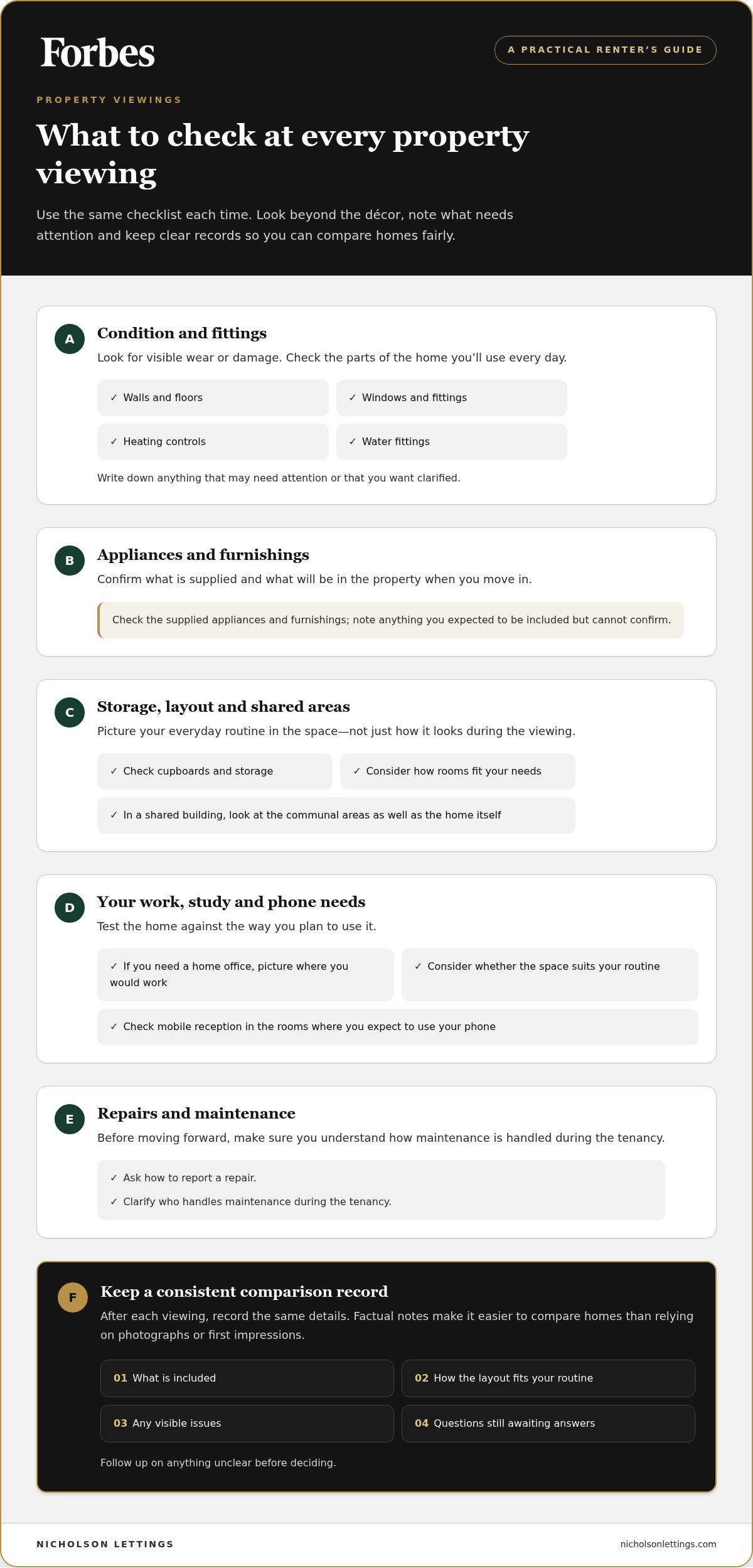
Use your priorities to assess each home consistently. Photographs can help you shortlist properties, but they can’t show how a room feels to work in, whether the storage suits your belongings or the condition of fixtures. During property viewings, look beyond the décor and note anything you want clarified before moving forward.
What should you check during property viewings?
Use the same checks at each viewing. Look for visible wear or damage, and assess the windows, heating controls and water fittings. Check the supplied appliances and storage. If you need a home office, picture where you’d work and whether the space suits your routine. You can also check mobile reception in the rooms where you expect to use your phone.
Condition: Look over walls, floors, windows and fittings; note anything that may need attention.
Appliances and furnishings: Confirm what’s included and what will be there when you move in.
Storage and layout: Consider whether cupboards, rooms and shared areas suit everyday use.
Maintenance: Find out how to report a repair and who handles maintenance during the tenancy.
In a shared building, look at the communal areas as well as the home itself. Write down questions and follow up on anything unclear. The UK government’s guide to private renting is a useful reference for general information about renting in England.
How to compare homes without losing track
After several viewings, it’s easy to mix up the details. Use one written comparison for every property, based on your essentials and preferences. Record what’s included, how the layout fits your routine, any visible issues and questions that still need answers. Factual notes make it easier to compare homes rather than relying on photographs or first impressions.
For example, note whether a home has the furnishings and storage you need, how it fits your commute, and whether you’ve received a clear explanation of repairs and maintenance. Mark unanswered questions to follow up before deciding. This gives you a useful record when weighing up your options.
If Liverpool is on your shortlist, Luxury Apartments to Rent in Liverpool: The Professional’s Guide 2026 offers a local starting point. For support with a property search across Liverpool and the wider North West, explore Nicholson Lettings’ home-finding service.
Tenancy Agreements, Deposits and Responsibilities: What First-Time Renters Should Check
Your tenancy agreement sets out how the tenancy is intended to work. Read it before you commit, and ask for a clear explanation of anything you don’t understand. If you’re renting in the UK for the first time, checking the details now can help prevent confusion later about responsibilities, repairs or deposit arrangements.
Tenancy frameworks and deposit rules differ across England, Wales, Scotland and Northern Ireland, and can change. Use current guidance for the nation where the property is located rather than relying on an old template or advice written for somewhere else. Shelter’s advice for private renters is specific to England; use guidance for the relevant nation for other parts of the UK.
Which tenancy details should you read before agreeing?
Start with the basics: confirm the named parties and property address, then check how the agreement describes the tenancy arrangement and when it starts. Read what it says about your responsibilities and the landlord’s or agent’s role. If a term is unclear, get an explanation in writing before signing, so you have a record of what was agreed.
Pay close attention to practical arrangements. Find out how to report repairs, who to contact with a concern and how updates will be handled. Read the sections about looking after the home, supplied furnishings and appliances, and shared areas. Check that the written terms match what you were told during your property search. If you don’t recognise a tenancy term, verify its current meaning and relevance for that nation instead of assuming older guidance still applies.
How to understand deposit arrangements and renter responsibilities
Read the deposit section carefully. Check whether the agreement refers to a tenancy deposit or a deposit-alternative arrangement, and understand the terms for that option. They aren’t automatically the same: don’t assume an alternative works like a refundable deposit or carries identical protections. Check what you may be responsible for during and at the end of the tenancy, and keep the relevant documents and written explanations together.
If a tenancy deposit is involved, use current guidance for the relevant nation to understand how its handling and protection should work. For a deposit alternative, read the scheme information closely and make sure you understand the arrangement before agreeing. Nicholson Lettings offers a deposit-alternative scheme; review its terms alongside the tenancy agreement so you can make an informed choice.
For a Liverpool-focused look at this option, read Luxury Apartments in Liverpool with No Deposit: The 2026 Renter’s Guide. Whichever arrangement applies, keep a copy of your agreement and related correspondence. Clear records make it easier to check your responsibilities and refer back to what was agreed.
Moving Into Your First Rental: A Practical Check-In and Reporting Routine
Getting the keys is exciting, but a few organised checks can make the first days in your new home easier. If you’re renting in the UK for the first time, inspect the property before unpacking, record its condition and make sure you know how to get help if something needs attention.
What to record when you receive the keys
Walk through each room and check the visible condition of walls, floors, fixtures, supplied appliances and furnishings. Photograph existing marks or damage, then add brief notes describing where each issue is. Include the date and keep the original files together. A clear record gives you and the managing agent a shared reference point if questions arise.
Send your notes and photographs through the agreed channel, following the check-in process you’ve been given. Don’t assume a mark or fault has already been recorded. Keep a copy of what you send and any response. Confirm how to access the property and shared areas, where to find relevant household information, and how to contact the landlord or managing agent.
What to do when something needs attention
Report issues promptly using the agreed method. Describe what happened, where it is and whether it affects your use of the home. Add photographs if they help explain the problem. For example, “the kitchen tap is dripping” is more useful than “something is wrong in the kitchen”. Keep a copy of your message and any reply or update.
An emergency repair is urgent repair work required to address a serious property fault or risk. If you believe an issue is urgent, use the emergency repair route provided for your tenancy rather than relying on a routine report. Follow the instructions you’ve received, and note when you reported the fault and what response followed. Don’t assume a particular response time unless it’s set out in your tenancy information.
Keep a simple record of reported issues, updates and completed work. A dated email or short log can help you track what has been agreed and follow up clearly if needed. Nicholson Lettings’ dedicated Tenant Liaison Officer and in-house maintenance team support tenants after move-in.
Looking for a home in Liverpool, St Helens, Wigan, Manchester, Salford or Warrington? Explore Nicholson Lettings’ bespoke home-finding service to focus your local search.
Find a First Rental With Local Support From Nicholson Lettings
After preparing your application, viewing homes and checking the tenancy details, look for a property that fits your priorities and move-in plans. Nicholson Lettings manages furnished rental homes across the Liverpool City Region and wider North West, including Liverpool, St Helens, Wigan, Manchester, Salford and Warrington. If you’re renting in the UK for the first time, local guidance and clear support can make the search and move easier to manage.
How managed furnished homes can simplify a first move
A furnished home can reduce the amount you need to source and assemble before settling in, particularly if you’re relocating for work or study. Check the details for the specific property so you know which furnishings and appliances will be there when you arrive.
Support matters after move-in, too. Nicholson Lettings has a dedicated Tenant Liaison Officer to support communication with tenants, alongside an in-house maintenance team for property issues. Knowing how to report a repair and who to contact gives you a clear route for raising concerns during your tenancy.
Searching across Liverpool and the wider North West
Your local search may cover more than one town or city. You might weigh up a shorter commute against access to transport, or consider whether St Helens or Warrington better suits your routine. Nicholson Lettings’ bespoke home-finding service helps focus your search around your requirements.
Share your preferred locations, the space and furnishings you need, and any move-in details that matter to you. Clear priorities help shape a more relevant search. If Liverpool suits your plans, Luxury Apartments to Rent in Liverpool: The Professional’s Guide 2026 is a useful local read alongside your property search.
Ready to take the next step? Explore suitable rental homes or request a bespoke property search with Nicholson Lettings for practical local support.
Take Your First Renting Steps With Confidence
Renting in the UK for the first time feels more manageable when you follow a clear process: decide what matters in a home, compare properties during viewings and read the tenancy terms before agreeing. Once you move in, dated photos and clear written reports help you keep a useful record of the property’s condition and any issues.
For local support, Nicholson Lettings manages over 250 properties across the Liverpool City Region and offers furnished rental homes across Liverpool, St Helens, Wigan, Manchester, Salford and Warrington. A dedicated Tenant Liaison Officer and in-house maintenance team support you beyond the search, while a bespoke home-finding service can focus your options around your needs.
Ready to find a home that fits your plans? Explore furnished rental homes and request a property search with Nicholson Lettings.
Frequently Asked Questions
What do I need to rent a home in the UK for the first time?
Prepare identification and relevant details about your income, employment and rental history, then keep them easy to access. A landlord or letting agent may request references or other information, but application requirements vary. Follow the instructions for the property and respond accurately. Before agreeing to a tenancy, review the paperwork, ask about anything unclear and check that the terms apply to the nation where the home is located.
Can I rent in the UK without a rental history?
Yes, having no previous rental history doesn’t automatically rule out applying. Be ready to explain your circumstances and provide other relevant information if requested, such as income details or references. Requirements vary between landlords and applications, so no single set of documents guarantees success. Keep your details accurate, reply promptly where possible and ask for clear instructions if you’re unsure what information is needed.
What should I check at a property viewing?
Look beyond the photographs. Check visible condition, windows, heating controls, water fittings, storage and supplied appliances. Consider whether the layout suits your daily routine, including work or study, and inspect shared areas if the building has them. Confirm which furnishings and appliances will be there when you move in. Note visible issues and unanswered questions, then follow them up with the landlord or letting agent.
Do tenancy rules differ across the UK?
Yes. Renting rules differ between England, Wales, Scotland and Northern Ireland, so guidance for one nation may not apply to a property elsewhere. Check current, authoritative information for the nation where you plan to rent, particularly before relying on advice about tenancy agreements, deposits or responsibilities. Nicholson Lettings manages homes across Liverpool, St Helens, Wigan, Manchester, Salford and Warrington, all in England, but always read the terms for your specific tenancy.
What is the difference between a tenancy deposit and a deposit-alternative scheme?
A tenancy deposit and a deposit-alternative scheme are different arrangements, so don’t assume they have identical terms or protections. Read the relevant agreement and scheme information carefully to understand what you’re agreeing to, what responsibilities may apply and how the arrangement works during and at the end of the tenancy. Nicholson Lettings offers a deposit-alternative scheme. Review its terms alongside the tenancy agreement before deciding which arrangement applies to you.
What should I do if I find damage after moving in?
Record the damage as soon as you notice it. Take dated photographs, note its location and condition, then send the information through the agreed reporting channel. Keep copies of your message and any response. If the issue needs attention, describe it clearly and follow the repair-reporting instructions you received. For an urgent fault or risk, use the emergency repair route provided for your tenancy.
Can I rent a furnished home if this is my first tenancy?
Yes. A furnished home can be a practical choice for a first tenancy, as it may reduce the furniture you need to source and assemble before settling in. Nicholson Lettings offers furnished rental homes across Liverpool, St Helens, Wigan, Manchester, Salford and Warrington. Check the details for the home you’re considering and note what will be in place when you move in.