Negotiating Rent Renewal in the UK: A Guide for Tenants

When your landlord proposes a rent increase, an immediate yes or no is not your only option. For tenants negotiating rent renewal UK-wide, checking the paperwork and preparing evidence can make the conversation clearer and more manageable.
It’s understandable to worry that questioning a proposed increase could put your home at risk, particularly when it’s hard to compare rents. Rules differ across the UK, so check which guidance applies where you live before deciding how to respond.
This guide explains how to review your tenancy details, gather relevant local comparisons and make a clear, respectful request. You’ll also find ways to keep a written record, consider practical alternatives and identify when to seek current, jurisdiction-specific housing advice. With some preparation, you can make an informed decision about your next step.
Table of Contents
What to check before negotiating rent renewal in the UK
An approaching renewal can put pressure on your decisions. You may be weighing the proposed rent against your budget while trying to work out whether you need to respond by a particular date. Start with your tenancy paperwork, then identify the rules for the part of the UK where the property is located. A proposed rent is a starting point for discussion, not an agreement you should assume you’ve accepted.
Which tenancy details should you check first?
Find your signed tenancy agreement and any later written changes. Note the end date, any wording about renewal and any clause about reviewing the rent. These details help you understand what your landlord or agent is proposing, but a rent-review clause does not necessarily determine which legal process applies.
Check how the agreement describes your tenancy and whether your landlord lives in the property. Living arrangements and tenancy type can affect which legal rules apply. Don’t rely on the word “renewal” alone: read the documents and consider the circumstances of your home.
Record the dates: note when your current agreement began, any stated end date and when the proposed change would take effect.
Keep the correspondence: save the proposal, notices and messages, including the dates you received them.
Identify your UK nation: housing rules differ across England, Wales, Scotland and Northern Ireland. Use current official guidance for the nation where the property is located, or get housing advice if your position is unclear.
What is the difference between renewal and a rent increase?
A landlord may invite you to discuss a new agreement or propose different terms. Read the full proposal, ask for time to consider it and don’t assume that receiving it means you’ve agreed. Respond in writing so there’s a clear record of what you accepted, questioned or asked to discuss.
A discussion about terms is not necessarily the same as a formal rent-increase process. In England, the Renters’ Rights Act 2025 came into force on 1 May 2026. Private tenancies became Assured Periodic Tenancies, and landlords must use a formal Section 13 notice, Form 4A, to increase rent. The increase can happen only once in any 12-month period, not during the first year of a tenancy, and at least two months’ notice must be given. A verbal agreement does not replace the required notice. Check current official guidance before acting, as these England rules shouldn’t be assumed to apply elsewhere in the UK.
For background, see this overview of rent regulation in England and Wales, but use current official guidance when making decisions about your tenancy. In England, Section 21 “no-fault” evictions were abolished on 1 May 2026; landlords must rely on specific legal grounds to regain possession. Knowing the difference between a proposal and a formal notice can help you prepare for negotiating rent renewal UK discussions without confusing the two.
How to build a strong case for negotiating rent renewal
Once you understand the proposal, focus on evidence that helps explain what would be fair for your home. A few well-matched comparisons and a clear account of your tenancy are more useful than a general claim that rents elsewhere are lower. Keep your notes factual, balanced and easy to follow.
A useful rent comparison is a similar home in a similar place, advertised on a date you can record. It can support a discussion, but it doesn’t prove that the same rent applies to your property.
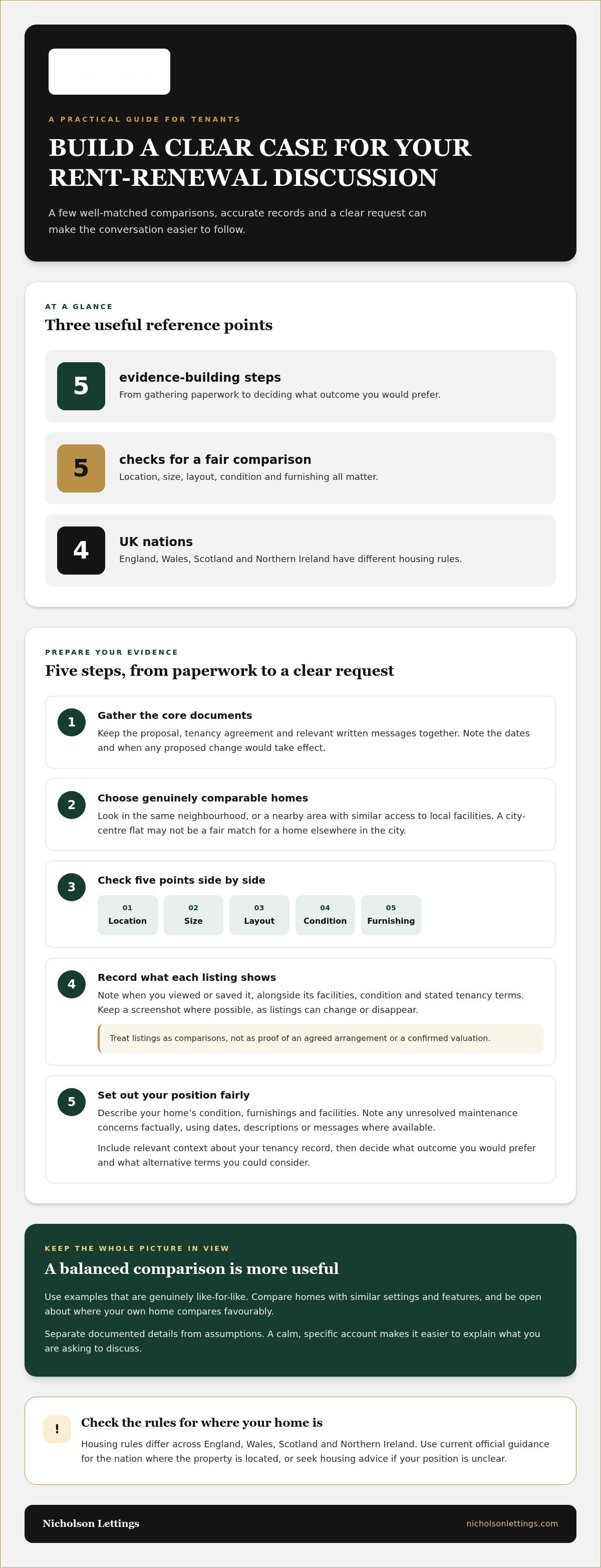
Collect your core documents. Keep the landlord’s proposal, your tenancy agreement and relevant written messages together. Note the current rent, the proposed amount and any stated date for a change. This gives you a clear reference point and helps separate documented details from assumptions.
Find genuinely comparable homes. Look in the same neighbourhood or a nearby area with similar access to local facilities. A flat in Liverpool city centre may not be a fair match for a home elsewhere in Liverpool. Similarly, compare St Helens homes with nearby options only when the location and setting are genuinely alike. Focus on properties with similar size, layout, condition and furnishing.
Record what each listing includes. Note when you viewed or saved it, its advertised rent, furnishing, facilities, condition and any tenancy terms shown. Keep a link or screenshot where possible, as listings can change or disappear. Don’t rely on one example or treat asking rents as agreed rents or a confirmed market valuation.
Set out your home’s condition fairly. Record features that support its value, such as its condition, furnishings or facilities. Separately note unresolved maintenance concerns that affect your experience of the property. Stick to dates, descriptions and any reports or messages you have rather than overstating an issue. A balanced account is more credible than a list of negatives alone.
Include your tenancy record and desired outcome. If you’ve paid rent reliably, you can mention this as relevant context, while recognising that it doesn’t determine what rent is appropriate. Decide what outcome you’d prefer, then identify a realistic alternative, such as a different proposed rent or another term that matters to you. This helps you approach the conversation with options rather than an ultimatum.
Before writing, check that your examples are like-for-like and that your request follows from the evidence. If your well-maintained, furnished home compares favourably with the examples, acknowledge that too. It shows you’re considering the whole picture rather than looking only for the lowest advertised rent.
For residents in managed furnished homes, clear communication can help keep renewal questions organised. Nicholson Lettings has a dedicated Tenant Liaison Officer to support residents. Learn more about managed furnished homes.
Compare your rent-renewal options before responding
A proposed increase can feel like a decision you have to make straight away. Your response depends on your budget, the home’s condition, your evidence and the process that applies to your tenancy. Use the comparison below to decide what you want to ask for before replying.
Should you negotiate rent or discuss other renewal terms?
Think beyond the rent figure. If the proposed amount is difficult to manage, ask whether a different figure or a change to another practical term could make the arrangement workable. For example, consider whether timing or the length of an arrangement matters to you. Don’t assume a particular term is available or that the landlord must agree.
Make your alternative specific. Explain what you’re asking for, why it would help and how it relates to your evidence or circumstances. The property’s condition can inform the discussion, particularly when you have a clear record of unresolved concerns. It doesn’t guarantee a lower rent or any other outcome. A calm, balanced request is more useful than an ultimatum.
When might a formal challenge or independent advice be relevant?
An informal conversation is different from using a formal dispute route. If you’re in England and receive a formal rent-increase notice, check current government guidance promptly. Eligible tenants may be able to challenge a proposed increase at the First-tier Tribunal before the new rent is due to start. The tribunal assesses the market rent and can set the proposed figure or a lower market rate, not a higher one. Don’t assume you qualify or that a particular result is assured.
Procedures differ across England, Wales, Scotland and Northern Ireland. Before taking formal action, check current official guidance for your nation and tenancy, including eligibility rules, deadlines and required steps. A respectful request can open a discussion, but it can’t guarantee renewal, agreement or a legal outcome. If you’re negotiating rent renewal UK wide, confirm the rules for the property’s location before choosing your next step.
How to negotiate rent renewal: a practical conversation plan
A clear, courteous message gives your landlord or agent something specific to consider. Focus on the outcome you want, your reasons and any alternative you’d be willing to discuss. This plan takes you from your first reply to a written record of what happens next.
Choose the right contact and channel. Reply to the person who sent the proposal, using the same email thread where possible. Check any response date they gave you and allow time for a considered exchange. Don’t leave your request until the last moment.
Open positively. Acknowledge receipt and say you’d like to discuss the proposed rent or renewal terms. If you value the home, its condition or the support you receive, say so. A measured opening helps keep the exchange constructive without weakening your request.
State your evidence briefly. Select a few relevant comparisons or documented points about the property. Explain why they matter, such as differences in location, furnishing or condition. Rather than sending a large bundle without context, make it easy for the other person to follow your reasoning.
Make a clear request. State the rent or term you’re proposing and give a short reason. Keep it realistic and avoid threats or legal claims you can’t support. If you’d consider another arrangement, explain what it is rather than leaving the other person to guess.
Invite a discussion and set a follow-up date. Ask whether your proposal can be considered and suggest a reasonable date for a reply. Note when you sent your message and keep any response. If there’s no answer by that date, follow up politely in writing.
Confirm the outcome carefully. If you reach a verbal understanding, email a concise summary of the rent, relevant dates and any other agreed terms. Ask the landlord or agent to correct anything you’ve misunderstood. Don’t rely on a conversation alone, and check that any required formal process is followed.
A concise message structure
Keep your email to four parts: acknowledge the proposal, state the evidence, make your request, then invite discussion. For example: “Thank you for sending the renewal proposal. I’ve compared it with similar furnished homes nearby and would like to discuss a different rent. Would you consider my proposal? I’m happy to talk through the comparisons and would appreciate a response by [date].” Attach only the details that support your point.
If your rent proposal is declined, stay calm. Record the response, review your options and seek current advice if you’re unsure what to do next. Keep messages, notices and notes together, including dates and any changes discussed. If wider tenancy arrangements are part of the conversation, Nicholson Lettings’ guide to deposit alternatives can help you understand another aspect of renting.
For practical support with a managed home and tenancy communication, explore Nicholson Lettings’ tenant support. Clear records and a respectful approach can make negotiating rent renewal UK discussions easier to manage, even if you and the landlord don’t reach agreement straight away.
Renewing a managed home with Nicholson Lettings
A renewal is also a chance to consider what you need from your home over the coming months. Alongside rent and tenancy terms, think about whether the location, furnishing and day-to-day arrangements still suit your work, travel and household needs. If you’re already a resident, keep renewal questions clear and in writing so you can refer back to what has been discussed.
Nicholson Lettings offers furnished rental homes across Liverpool, St Helens, Wigan, Manchester, Salford and Warrington. Each area offers different options, so decide what matters most before exploring homes. You might prioritise your journey to work, the layout of the property or having furniture in place when you move in.
What support can renters expect in a managed home?
Use the communication route provided for tenancy questions and keep a record of your correspondence. If a renewal proposal raises a query, explain the point clearly and include the relevant document or date. For maintenance concerns, describe the issue and when you reported it so the matter can be followed up through the appropriate process.
Furnished accommodation can simplify a move by reducing the need to arrange and assemble furniture yourself. A clear process for tenancy and property queries can also make practical details easier to manage. These features won’t determine the outcome of a rent discussion, but they can help you assess whether the home still meets your needs.
What are sensible next steps for Liverpool City Region renters?
If you’re a current resident, review your priorities before replying to a renewal proposal. Keep your correspondence together, note any questions that still need an answer and make sure you understand the terms being discussed. If you need guidance on your rights or the process for your tenancy, use current housing advice for the UK nation where your home is located.
If you’re looking for a home, start with the area and features that fit your routine. Liverpool, St Helens and Wigan may suit different local needs from Manchester, Salford or Warrington, so compare locations as well as properties. Nicholson Lettings’ furnished apartments suit renters who value having furniture in place, while a property search can help focus your choices on the areas and home type you’re seeking.
Whether you’re planning a move or weighing up your next tenancy decision, a clear process can make the practical steps easier. Explore Nicholson Lettings’ furnished homes and request a property search when you’re ready to find a home that suits your needs.
Take your next step with confidence
Your renewal conversation is an opportunity to decide what will make your next chapter at home work for you. Set a clear personal limit, consider what matters beyond the rent and give yourself time to weigh the response. If you’re unsure about the rules or your position, get current advice for the nation where you live before making a decision.
You don’t need to have every answer at once. A considered choice, whether you stay or look elsewhere, can help you move forward with greater peace of mind. If you’re negotiating rent renewal UK wide and decide a move is right for you, furnished homes can make settling into your next place more straightforward.
Explore furnished homes with Nicholson Lettings and take the next step towards a home that suits your needs.
Frequently Asked Questions
Can you negotiate rent when renewing a tenancy in the UK?
Yes. You can ask your landlord or letting agent to consider a different rent or another arrangement. Be precise: say whether you’re proposing a particular rent, asking how the figure was set or exploring another term. In negotiating rent renewal UK discussions, separating these questions can make it easier to understand what the landlord is willing to consider. A request doesn’t oblige them to agree.
When should I start negotiating a rent renewal?
Start when you learn a renewal discussion is approaching or receive a proposal, rather than waiting until you feel rushed. Work out what rent would fit your household budget and what you’d do if the proposal stays unchanged. Check whether the message asks you to respond by a particular date, and allow time for a follow-up conversation if your first request raises questions.
Can my landlord refuse to renew if I negotiate rent?
Your landlord may decline your proposed terms, and making a request doesn’t guarantee a renewal. A rent discussion by itself doesn’t tell you whether or how a tenancy can end; that depends on your circumstances and the rules that apply. If the conversation shifts from rent to ending your occupancy, treat that as a separate issue and get advice about the specific communication you’ve received.
What evidence should I use to negotiate a rent renewal?
Choose information that explains your request clearly. If a repair affects how you use a room, for example, note the practical impact and when it began. If the home is in good condition, acknowledge that too. You could also work out what rent fits your budget and explain the figure you can manage. Keep your case proportionate: a few relevant details are easier to assess than a long list of unrelated points.
Do rent-increase rules differ across the UK?
Yes. The relevant process may depend on where the property is and details such as the kind of tenancy and the household’s circumstances. Be cautious with general online advice that treats the UK as if one process applies everywhere. Check that any guidance covers your situation, and note its publication or update date before using it to make a decision.
What should I do if my landlord rejects my rent-renewal proposal?
First, clarify what the refusal means: has the landlord rejected only your suggested rent, or are they also proposing different tenancy terms? You could ask whether there’s room to discuss an alternative that addresses your main concern, such as a practical change to another term. If no option feels workable, compare the implications of staying or moving before deciding. Don’t agree to terms you haven’t had time to consider.