Liverpool Student Cost of Living: 2026 Budget Guide

Rent is only the starting point when you’re planning student life in Liverpool. The cost of renting in Liverpool depends on more than the figure on a property listing: household bills, food, travel and move-in arrangements all affect what you’ll need to plan for. It can be difficult to compare homes when you’re not sure which expenses sit outside the rent.
Use this guide to build a budget from your own figures and compare homes by their overall commitments, not rent alone. We’ll cover bills, everyday spending, transport and tenancy details that affect your plans, including what’s furnished, what’s included and how deposits are handled. You’ll also see how to compare a home’s location with your campus and regular journeys. Furnished accommodation can reduce the work of setting up, while clear tenancy information and tenant support can make the process easier to manage.
Table of Contents
What belongs in a Liverpool student living budget beyond rent?
How do Liverpool accommodation choices shape a student budget?
Which Liverpool location and travel habits should students factor in?
How can students build a realistic Liverpool monthly budget?
How can managed furnished renting support a Liverpool student's move?
What belongs in a Liverpool student living budget beyond rent?
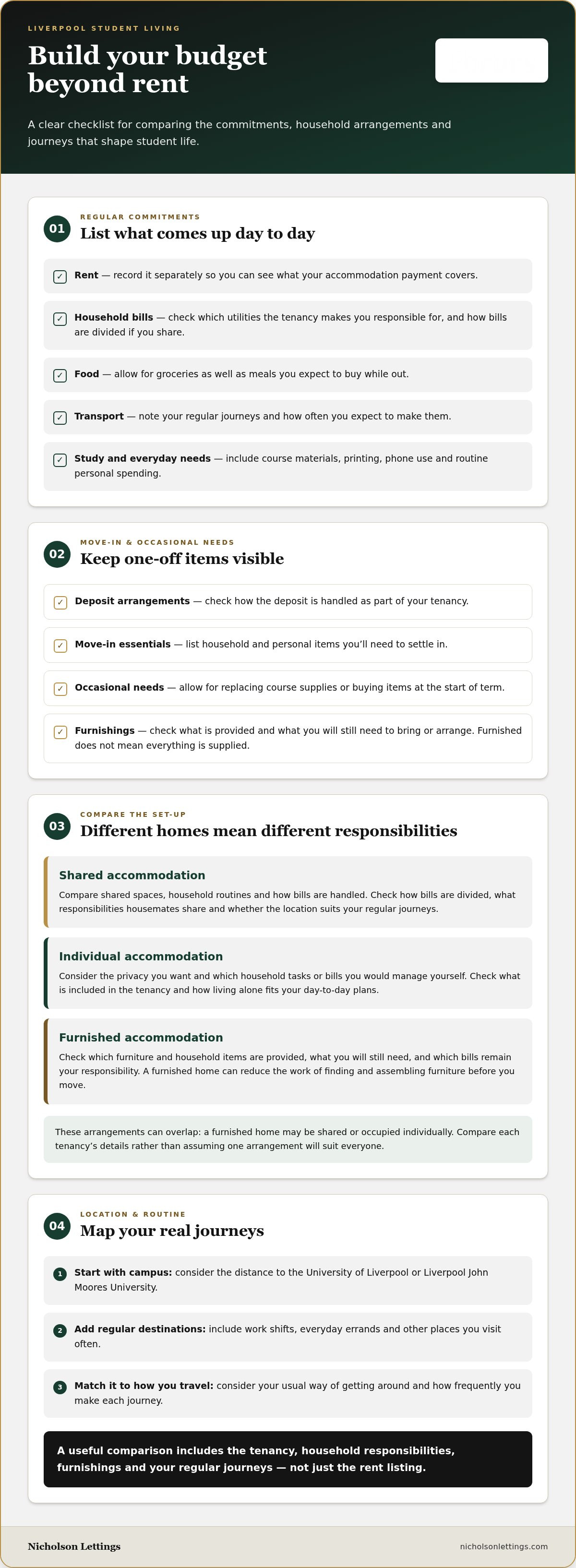
Moving to Liverpool for study means planning for more than rent. Before choosing a home, list the regular commitments and one-off essentials that will shape your day-to-day budget. Your tenancy, household and routine all affect what to include, so use this as a checklist rather than a price estimate or a universal budget. For a general introduction to the city where you’ll be living, see Liverpool.
Rent: Record it separately so you can see exactly what your accommodation payment covers.
Household bills: Check which utilities, if any, you’re responsible for under the tenancy.
Food: Allow for groceries as well as meals you expect to buy while out.
Transport: List your regular journeys and how often you expect to make them.
Study needs: Include course materials, printing and other items relevant to your studies.
Move-in essentials: Note any deposit arrangements and household or personal items you’ll need to settle in.
Which regular expenses should Liverpool students list?
Start with the tenancy. Separate rent from bills, then identify which utilities you’ll need to arrange or pay for yourself. If you’re sharing, find out how household responsibilities and bills are divided. Don’t assume that every bill is included or handled in the same way across different homes.
Next, list food, local travel, study materials, phone use and routine personal spending. Separate predictable monthly commitments from occasional needs, such as replacing course supplies or buying items at the start of term. This makes it easier to see what is likely to stay consistent and where you may need flexibility.
What can change from one student household to another?
Living alone, sharing with housemates or choosing another household arrangement affects how you manage shared spaces, bills and everyday responsibilities. None is automatically the least expensive choice for everyone. Compare the full set-up and the way you prefer to live, rather than making a decision based on rent alone.
Location affects your routine too. Consider the distance from home to campus and the places you visit regularly, then factor in how you actually travel. A student who walks to lectures most days may plan differently from someone making frequent journeys across the city.
Furnished accommodation can reduce the work of arranging and assembling furniture before you move. It won’t remove every move-in requirement, so keep a separate list of essentials you’ll still need. Nicholson Lettings offers furnished homes and a deposit-alternative scheme to help with the practical arrangements of renting.
How do Liverpool accommodation choices shape a student budget?
The cost of renting in Liverpool depends on the tenancy and household arrangement as well as the advertised rent. Compare what’s included, who manages household tasks, how much privacy you want and how you’ll travel. The rent figure on its own won’t show your household’s full commitments.
These arrangements can overlap: a furnished home may be shared or occupied individually. Compare the details of each tenancy instead of assuming one type will always be the best fit.
Shared or individual accommodation: what should students weigh?
Sharing means coordinating bills, cleaning and communal spaces with other people. Living alone offers more privacy, but you’ll need to understand which household responsibilities are yours. Neither arrangement is automatically cheaper or easier. Read the tenancy information to understand what’s included and what you’ll manage, then consider whether the household routines fit your timetable.
Can furnished accommodation simplify a Liverpool move?
A furnished home can reduce the work of finding and assembling furniture before you settle in. Check the property details to see what furnishings and household items are provided, then list anything you’ll need to bring or arrange yourself. That way, you can plan the practicalities without assuming that furnished means everything is supplied. For broader context, read the guide to fully furnished rental benefits.
If student funding is part of your planning, UK government student finance explains potential extra help. Nicholson Lettings offers managed furnished homes in Liverpool and St Helens, with services also covering Wigan, Manchester, Salford and Warrington. You can explore furnished homes online.
Which Liverpool location and travel habits should students factor in?
A home that looks convenient on a map may fit your routine differently once you account for lecture times, work shifts and everyday errands. Your campus is a useful starting point, but it isn’t the only destination to consider. Students at the University of Liverpool or Liverpool John Moores University should compare homes with their own campus and timetable. The same approach works for students at other institutions.
Travel can affect the cost of renting in Liverpool, so focus on the journeys you actually need to make. Rather than relying on general claims that an area is cheaper or better, compare routes, travel time and convenience against your own weekly routine.
How can students compare a home with their campus routine?
List the places you expect to visit regularly, such as lectures, work, shops and essential appointments. For each potential home, check the route and timetable for the times you’d usually leave and return. Look at how often services run when you need them and whether the journey is direct or involves a change.
Then think about how the journey fits around your day. A home in surroundings you like may take more planning for early lectures or late finishes. A shorter campus journey may not help if you regularly travel elsewhere. Weigh the home you want against the practical demands of getting around instead of judging distance alone.
What should a Liverpool neighbourhood comparison include?
Compare each area with your routine and preferences, not a one-size-fits-all ranking. Consider access to campus, work, shops and appointments, as well as transport options and the day-to-day environment you want. Treat neighbourhood names as a starting point for research, not a guarantee of convenience or suitability.
Regular destinations: How easily can you reach the places you visit each week?
Travel options: Which routes and services fit your usual timetable?
Daily environment: Does the area suit how you prefer to spend time outside lectures?
Practical checks: Where possible, travel the route and visit the surrounding area at times that reflect your routine.
Check current route information and timetables before you decide. The journey you’ll rely on matters more than an estimate based on distance alone. This gives you a clearer basis for comparing homes and including travel in your wider student budget.
How can students build a realistic Liverpool monthly budget?
A useful budget starts with your own figures, not a generic estimate. The cost of renting in Liverpool varies with your income, tenancy terms, household responsibilities and routine. Work through these steps before committing to a home, then adjust the plan once you have a record of your actual spending.
1. List your income. Record the money you expect to have available each month, including support you can rely on.
2. Record regular commitments. List rent, bills, phone use, food, travel and other routine spending separately.
3. Check the tenancy responsibilities. Read what’s included, which bills you’ll manage and what you need to arrange yourself.
4. Allow for variable needs. Leave room for changes in household use, study requirements and personal circumstances.
5. Review and adjust. Compare your plan with your actual spending after your first month, then update it where needed.
Keep move-in requirements separate from regular monthly commitments. Deposits and household essentials affect what you need to prepare before moving, but they aren’t the same as ongoing bills. For more detail on planning this part of a move, read the Liverpool no-deposit renting guide.
What should students check before agreeing a tenancy?
Read the tenancy terms carefully. Note the rent arrangements, what’s included and which responsibilities are yours. Make a separate move-in list so one-off requirements don’t get mixed up with regular commitments. Nicholson Lettings offers no-fee renting, with no further hidden fees, so you can plan around clear information about this part of the process.
Blank monthly budget template
Income: _____
Rent: _____
Household bills: _____
Food: _____
Transport: _____
Study and phone needs: _____
Personal and variable spending: _____
Move-in requirements, recorded separately: _____
How should students prepare for changing or unexpected needs?
Use the template as a working plan, not a fixed monthly amount that suits every student. Household use and personal needs can change during term. After your first month, review receipts, account activity and bills against your estimates. Seeing your actual spending makes it easier to spot where your plan needs a practical adjustment.
For a more straightforward move, explore Nicholson Lettings’ managed homes and include the tenancy details in your planning.
How can managed furnished renting support a Liverpool student's move?
Once you’ve set out your budget and compared the practical demands of different homes, consider what support comes with a managed tenancy. Nicholson Lettings manages over 250 properties across the Liverpool City Region, including furnished homes, and provides a dedicated Tenant Liaison Officer and an in-house maintenance team. These services support tenants with settling in and managing their home. Nicholson Lettings serves renters across Liverpool, St Helens, Wigan, Manchester, Salford and Warrington.
Furnished accommodation can reduce the work of sourcing and assembling furniture before you move. Check the property details to see what’s provided and plan for any household items you’ll still need. Clear tenancy information also helps you understand what’s included, what you’re responsible for and how to raise a query. These details belong in your plans alongside the cost of renting in Liverpool, not as an afterthought.
What does tenant support look like during a tenancy?
A dedicated Tenant Liaison Officer provides a point of support for tenant queries and helps you understand the processes involved in your tenancy. Nicholson Lettings’ in-house maintenance team handles property maintenance, giving you a clear route for maintenance matters. Keep your tenancy details to hand so you know how to report an issue or raise a query.
For students, clear processes can make day-to-day responsibilities easier to follow. Save the contact information and instructions provided for your tenancy, and note how to report a maintenance issue before one arises. Knowing the process can make managing a new home feel more straightforward.
What is a deposit-alternative scheme?
A deposit-alternative scheme is an option to consider alongside a traditional deposit when planning your move. It isn’t the same arrangement as paying a conventional deposit, so read the scheme information and tenancy terms to understand how it works and what you agree to. The two options can have different conditions. For a fuller explanation, read the guide to deposit alternatives.
Finding a home while preparing for study can feel like a lot to manage. Clear information about furnishings, tenancy responsibilities and support can help you make a considered choice. Explore Nicholson Lettings’ managed homes to see how a furnished, professionally managed rental could fit your plans.
Plan your Liverpool move with confidence
A realistic student budget starts with the full picture: rent, household bills, food, travel, study needs and the practical details of moving in. Compare homes by what’s included and which responsibilities sit with you, then weigh location against your actual campus routine. That gives you a clearer view of the cost of renting in Liverpool and a budget shaped around your circumstances, rather than a generic estimate.
Choosing a home also means considering the support behind the tenancy. Established in 2008, Nicholson Lettings manages over 250 properties across the Liverpool City Region. Furnished homes can ease the task of setting up, while flexible tenancy agreements, a deposit-alternative scheme, a dedicated Tenant Liaison Officer and an in-house maintenance team provide practical support throughout the rental experience.
Explore furnished homes managed by Nicholson Lettings and take the next step towards a move that feels organised and comfortable. With a clear plan and practical support, you can focus on settling into student life in Liverpool.
Frequently Asked Questions
How much should a student set aside for living in Liverpool?
There’s no single budget that suits every student. Add up your income, rent, bills, food, transport, study needs and regular personal spending using your current figures. Keep move-in requirements separate from ongoing monthly commitments, and leave room for needs that can vary. The cost of renting in Liverpool depends on your tenancy and routine, so review your plan after your first month and adjust it using your actual spending.
What expenses should Liverpool students include besides rent?
Include household bills that your tenancy makes you responsible for, as well as food, local travel, phone use, study materials and routine personal spending. You may also need to plan for move-in essentials, such as items that aren’t supplied with the property. Separate predictable commitments from occasional or seasonal spending to see what you’ll need regularly and what to prepare for separately.
Are bills included in student rent in Liverpool?
Sometimes, but don’t assume bills are included. What’s covered depends on the accommodation and tenancy terms. Read the details to see whether utilities are included and which services or household payments you’ll need to arrange yourself. In a shared home, establish how shared bills and responsibilities are handled. Add any bills you’re responsible for as separate lines in your budget, rather than treating rent as your full housing commitment.
Is furnished accommodation useful for students moving to Liverpool?
Furnished accommodation can make a move simpler by reducing the need to source and assemble furniture before settling in. Check the property details to see which furnishings and household items are provided, then list anything you’ll still need. Furnished doesn’t necessarily mean every essential is supplied, and it doesn’t guarantee lower overall spending. It can, however, make the practical arrangements for moving into a new home easier to plan.
Can students rent a managed furnished home in Liverpool?
Yes. Nicholson Lettings offers furnished apartments for rent in Liverpool and St Helens, and manages over 250 properties across the Liverpool City Region. Its service area also includes Wigan, Manchester, Salford and Warrington. Review the tenancy details and requirements for the home you’re considering as part of your search.
How can students choose where to live in Liverpool?
Start with your own routine, not a general claim about a neighbourhood. Map journeys to your campus, work, shops and regular appointments. If you attend the University of Liverpool or Liverpool John Moores University, use your actual lecture locations and timetable to compare routes. Check current services and journey times for when you expect to travel, and consider whether the area suits how you want to spend your day.
What should I check before signing a Liverpool tenancy?
Read the tenancy terms so you understand the rent arrangements, what’s included and which responsibilities sit with you. Check the furnishings and household items provided, how bills are handled, and how to raise a maintenance query. Record move-in requirements separately from regular commitments. If you’re considering a deposit-alternative scheme, read its terms so you understand how that option differs from a traditional deposit before agreeing to the tenancy.