End of Tenancy Inspection Checklist UK: What to Check Before You Leave

Could a mark that was already there become a point of disagreement when you move out? Leaving a rental home can be stressful enough without uncertainty about what will be checked or how to show its condition. This end of tenancy inspection checklist UK renters can use will help you prepare methodically and keep clear records.
A fair handover starts with comparing the property’s condition at check-out with the inventory or check-in report. Cleaning expectations, everyday wear and maintenance issues can all raise questions, so gather your evidence before the inspection rather than relying on memory later.
Use this guide to check each room, fixture and supplied appliance, take useful photographs, record outstanding repairs and respond calmly if the report differs from your records. In a managed home, clear communication with the maintenance team and tenant liaison support can also help keep property matters organised.
Table of Contents
What does an end-of-tenancy inspection checklist cover?
An end-of-tenancy inspection is a review of the home’s condition at the end of your tenancy, usually considered alongside the check-in inventory or other tenancy records. An end of tenancy inspection checklist UK helps you prepare by separating four things that can easily get muddled: cleanliness, damage, missing items and maintenance issues that still need attention.
An inspection records condition; cleaning addresses cleanliness. A tidy, freshly cleaned home can still have a damaged fixture or an unresolved fault. Equally, an inspection may record the property’s condition without treating every mark as damage. Your tenancy agreement and check-in records are key documents for understanding what was agreed and what was present at the start.
Tenancy terms and relevant rules can differ between UK nations, so don’t assume one checklist or cleaning standard applies everywhere. Use this guide to organise your checks, then refer to your tenancy documents for the requirements that apply to you. A checklist supports your preparation; it doesn’t replace your agreement or decide the outcome of a deposit discussion.
How is a final inspection different from an end-of-tenancy clean?
Cleaning means removing dirt and leaving surfaces and rooms clean. An inspection records the property’s condition. The two are related, but they aren’t the same task. A clean kitchen could still have a cracked cupboard door, while an unreported leak remains a maintenance issue even after the room has been cleaned. Don’t assume cleaning alone addresses every point an inspection might record.
There isn’t one universal cleaning standard for every tenancy. Check the wording in your agreement and any check-in documents, then compare the home with its recorded starting condition.
Which records should you gather before the inspection?
Start with your check-in inventory or condition report and signed tenancy documents. If older paperwork refers to an Assured Shorthold Tenancy (AST), the linked overview can help explain the term. For your circumstances, rely on your current agreement and relevant guidance.
Gather dated photographs, messages about maintenance and records of faults you reported. These can help establish what was present at the start, what changed during the tenancy and which issues you raised. Organise them by room or item, such as “bathroom tap” or “living room wall”, so you can make a clear comparison if a question arises.
Room-by-room end-of-tenancy inspection checklist for renters
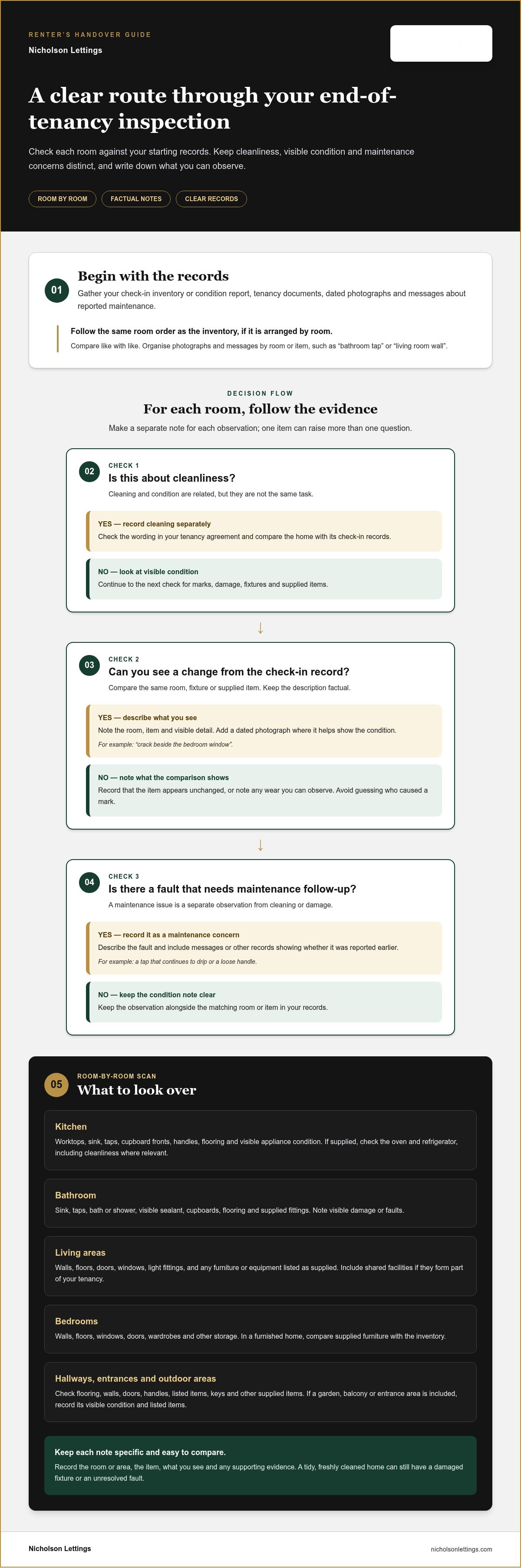
Work through the home in the same order as your check-in inventory, if it’s arranged by room. This makes it easier to compare like with like and reduces the chance of overlooking a cupboard, appliance or shared space. The end of tenancy inspection checklist UK renters use should focus on what you can observe: cleanliness, visible condition, fixtures and items supplied with the property.
For each point, note whether it appears unchanged, shows wear, has new damage or needs maintenance follow-up. Add a brief description and take a dated photograph where it helps show the detail. Keep your observations factual. For example, record “crack beside the bedroom window” rather than deciding who caused it.
Kitchen, bathroom and living areas
Kitchen: Check worktops, sink, taps, cupboard fronts, handles, flooring and visible appliance condition. If appliances were supplied, check the oven and refrigerator, including cleanliness where relevant, and compare their condition with the inventory.
Bathroom: Review the sink, taps, bath or shower, visible sealant, cupboards, flooring and supplied fittings. Record visible damage or faults, such as a loose handle or a tap that continues to drip.
Living areas: Look over walls, floors, doors, windows, light fittings and any furniture or equipment listed as supplied. Include a communal living room or shared facilities if they form part of your tenancy.
Record cleaning separately from condition. A mark on a surface, a damaged fitting and an appliance that needs attention are different observations, even if they’re in the same room.
Bedrooms, hallways and outdoor areas
Bedrooms: Check walls, floors, windows, doors, wardrobes and other storage. In a furnished home, compare supplied furniture with the inventory and note any visible changes.
Hallways and entrances: Look at flooring, walls, doors, handles and listed items. Check that keys and other supplied items can be accounted for against the records.
Outdoor areas: If a garden, balcony or entrance area is included in your tenancy, record its visible condition and any supplied items listed in the inventory.
For each finding, note the room or area, the item, what you see and any supporting evidence. Keep maintenance concerns separate from cleaning or damage observations, and refer to faults you’ve already reported. If you’re unsure how deposit matters are handled, GOV.UK explains the government-approved tenancy deposit scheme. In a managed home, clear maintenance communication can help keep the handover organised. Nicholson Lettings provides furnished rental homes and dedicated maintenance support across Liverpool, St Helens, Wigan, Manchester, Salford and Warrington. View its managed furnished homes.
How to compare the inspection with your check-in inventory
Compare each check-out observation with the same room, fixture or supplied item in your check-in inventory. A straightforward record helps you see what has changed without jumping to conclusions about why it changed or who is responsible. The end of tenancy inspection checklist UK renters use is most useful when it supports a clear, like-for-like comparison.
Dated check-in and check-out records make changes easier to identify and discuss. For each point, note the original description, the condition now and any evidence that supports your account. For example, if the inventory describes a bedroom wall as having a small mark, compare that specific area with the check-out note and any photographs, rather than making a general comparison of the whole room.
Original record: What does the inventory or condition report say about this exact item or area?
Current condition: What does the inspection report record, and what did you observe?
Evidence: Which dated photographs, messages or maintenance records help clarify the difference?
Consider wear in context. The age and starting condition of an item, its description in the inventory and the available records may all help explain a change. Don’t treat a mark as automatically your responsibility, or assume every change is fair wear and tear. Relevant tenancy terms and rules can depend on where you rent in the UK, so a general checklist can’t make a legal decision.
What counts as useful evidence during an inspection?
Use dated photographs or video that clearly show the relevant area or item. Keep copies of the inventory, tenancy documents, messages and maintenance reports together. For a reported fault, note when you first raised it and any response you received. A clear timeline can help distinguish an issue you reported from a new observation in the final report.
How should you handle a difference in the inspection report?
Stay specific and factual. Identify the report entry, compare it with the matching check-in record, then share the relevant evidence and explain what it shows. If you disagree, state which detail you believe is inaccurate and why. Avoid guessing about cause or responsibility. Check your tenancy documents and guidance for the relevant UK nation before relying on a formal dispute route. Citizens Advice offers guidance on getting your tenancy deposit back.
Clear records and maintenance communication can make a handover easier to manage. Nicholson Lettings provides furnished homes with dedicated maintenance support. Explore its managed furnished apartments.
Preparing for inspection day: a practical checklist
A little preparation can make the handover feel more manageable. Check your tenancy documents and earlier communications first, then arrange access and timing in line with the agreed process. Keep cleaning, maintenance and handover records as separate tasks so you can deal with each clearly.
Review your documents, walk through every area, record the condition, then raise outstanding matters. This simple sequence gives you a clear plan before you return the keys.
A simple final walk-through before handing back the keys
Take your inventory and checklist with you as you move through the home. Look inside cupboards, storage spaces and other easy-to-miss areas, as well as the rooms and fixtures you’ve already checked. Once cleaning is complete and your belongings are removed, take clear, dated photographs that show the final condition.
Review your tenancy documents and check-in records.
Walk through each room, cupboard and included outdoor area.
Finish cleaning tasks, then record the property’s condition with photographs.
Make a separate note of maintenance issues and any follow-up needed.
Return keys and supplied items using the agreed handover process, and keep a record of what you’ve handed back.
Don’t treat repairs as cleaning jobs. Avoid attempting work that could be unsafe or cause further damage. If a fault remains, record what you’ve observed and refer to any earlier message or maintenance report.
How to report outstanding maintenance issues
List each unresolved issue by room or item, describe what is happening and note when you first reported it. Keep any reply or repair record with your tenancy documents. If a fault is urgent and involves a serious property fault or risk, use the term emergency repair when reporting it. For other concerns, provide a clear description through the communication route used during your tenancy.
Nicholson Lettings has a dedicated maintenance team and Tenant Liaison Officer to support clear communication about property matters. Read about luxury flat maintenance in Liverpool for context on managed maintenance. For a professionally supported renting experience, explore Nicholson Lettings’ furnished homes.
After the inspection: resolve questions and complete the handover
Once you receive the inspection report, read it carefully before responding. Compare each concern with your check-in records and the evidence you collected, then note which points you agree with and which need clarification. A calm, specific reply is more useful than a general objection, especially when you’re managing the practical pressure of moving home.
How to raise an inspection concern clearly
Refer to the exact report entry, room and item. If the report says a kitchen worktop is damaged, for example, identify that entry and compare it with the matching inventory description and dated photographs. Explain plainly what your records show, and attach only the relevant evidence.
Keep copies of the report, your reply and any messages that follow. If you’re waiting for clarification, allow time for a response and keep communication in writing where possible. This creates a clear record of what was raised and when, without assuming how the matter will be resolved.
Check the relevant process before taking the next step
Deposit procedures and tenant rights vary across the UK. Before acting on a proposed deduction or using a formal dispute route, check current guidance for the nation where you rent, along with your tenancy documents and information from your deposit scheme. The end of tenancy inspection checklist UK renters use can help organise evidence, but it can’t replace advice or decide the outcome of a disagreement.
Keep the handover record together: the final report, check-in inventory, photographs, maintenance messages and any written response. If you reported a fault earlier, include the date you raised it and the reply received. This helps keep the discussion focused on facts rather than assumptions.
How professional property management can support clearer communication
Responsive maintenance support can help keep reported property issues visible, while a tenant liaison role gives renters a clear point of support for property-related communication. Nicholson Lettings manages over 250 properties across the Liverpool City Region and wider North West, with a dedicated maintenance team and Tenant Liaison Officer. The agency serves renters in Liverpool, St Helens, Wigan, Manchester, Salford and Warrington.
Landlords can read the landlord’s guide to property management for a management perspective. If you’re looking for a professionally managed furnished home, explore Nicholson Lettings’ rental homes and the support behind them.
Make your move-out handover feel more manageable
A clear end-of-tenancy inspection checklist UK renters can follow helps keep the final handover organised. Work through the home room by room, compare its condition with your check-in records and keep dated photographs and maintenance messages together. If the inspection report raises a concern, respond calmly to the specific point and explain what your records show.
Good communication matters too. Raise outstanding maintenance issues through the agreed channels and keep a copy of your messages, so there’s a clear record as you prepare to leave.
For your next move, Nicholson Lettings manages over 250 properties across the Liverpool City Region, supported by a dedicated maintenance team and specialist Tenant Liaison Officer. Explore professionally managed homes and the support behind them with Find a professionally managed home with Nicholson Lettings.
With clear records and a practical plan, you can approach the handover with greater confidence and focus on what comes next.
Frequently Asked Questions
What should be included in an end-of-tenancy inspection checklist?
Include every room, supplied fixture and furnishing, along with cleanliness, visible condition, keys and unresolved maintenance issues. Compare your observations with the check-in inventory or condition report, and keep dated photographs and relevant messages together. For example, note a mark on a wall separately from a fault you’ve already reported. Expectations can depend on your tenancy documents and location, so use the checklist to prepare, not as a replacement for your agreement.
Is an end-of-tenancy inspection the same as an inventory check?
No. A check-in inventory records the property’s condition and supplied items at the start of the tenancy; the final inspection records their condition at the end. Comparing the two can help identify what has changed. A difference in the records doesn’t, by itself, explain the cause or determine who is responsible. Check your tenancy documents and current guidance for the part of the UK where the property is located.
Do I have to be present at the end-of-tenancy inspection?
Whether you attend depends on the inspection arrangements and the terms of your tenancy. Read communications about access and timing, and keep a copy. If you can’t attend, ask for the inspection report or a clear written record of the findings. Keep your check-in documents and photographs available so you can compare them with the report. Not being present doesn’t mean you can’t raise a factual question afterwards.
Can a landlord charge for fair wear and tear?
Don’t assume every mark or change is damage, or that every proposed deduction is justified. The property’s starting condition, the tenancy documents, the type of change and the relevant rules may all matter. Guidance can differ across the UK, so check current advice for the nation where you rent. Keep dated evidence and ask for a clear explanation of any inspection finding you disagree with before responding.
How clean does a rental property need to be before an inspection?
Start with the cleaning expectations in your tenancy documents and any agreed handover instructions, as there isn’t one standard for every tenancy. Check kitchens, bathrooms, floors, surfaces and supplied appliances where relevant. Cleaning and property condition are separate matters: a clean room may still have a fault that needs recording. Once the home is ready, take dated photographs and ask for unclear expectations to be explained in writing before handover.
What should I do if I disagree with an end-of-tenancy inspection report?
Identify the exact room, item or report entry you disagree with, then compare it with your check-in inventory, dated photographs and maintenance messages. Send a concise written response explaining what the evidence shows, and keep a copy. Don’t assume what the outcome will be. If the concern involves your deposit or formal rights, consult current guidance for the UK nation where the property is located.
Should I report repairs before the final inspection?
Yes. Report outstanding faults through the communication route you’ve used during your tenancy, especially if you’ve raised them before. Describe what’s wrong, when you first noticed it and any response you received. Keep copies of messages, and don’t attempt work that could be unsafe. Nicholson Lettings’ dedicated maintenance team and Tenant Liaison Officer support renters in managed homes across Liverpool, St Helens, Wigan, Manchester, Salford and Warrington.