Warrington rental areas, rents, schools and local amenities

The best areas to rent in Warrington depend on your daily routine, not just the neighbourhood name. Stockton Heath, Birchwood, Great Sankey, Latchford and Orford each offer different options, so compare how well a home fits your work or study journey, school needs and access to local amenities. Feeling secure matters too, but a neighbourhood label alone can’t tell you whether a particular street and property suit your routine.
Choosing where to live can feel like a balancing act: you want a comfortable home in a location that works, without overlooking the practical details. This guide compares Warrington areas by the factors that shape everyday life, including nearby schools, transport links, employment and education access, and the amenities within reach.
Use these comparisons to narrow your search around your priorities, whether that means an easier commute, a family-friendly setting or convenient access to the town centre. The same approach can help if you’re comparing rental options across Liverpool, St Helens, Wigan, Manchester, Salford and Warrington.
Table of Contents
Nearby primary and secondary schools
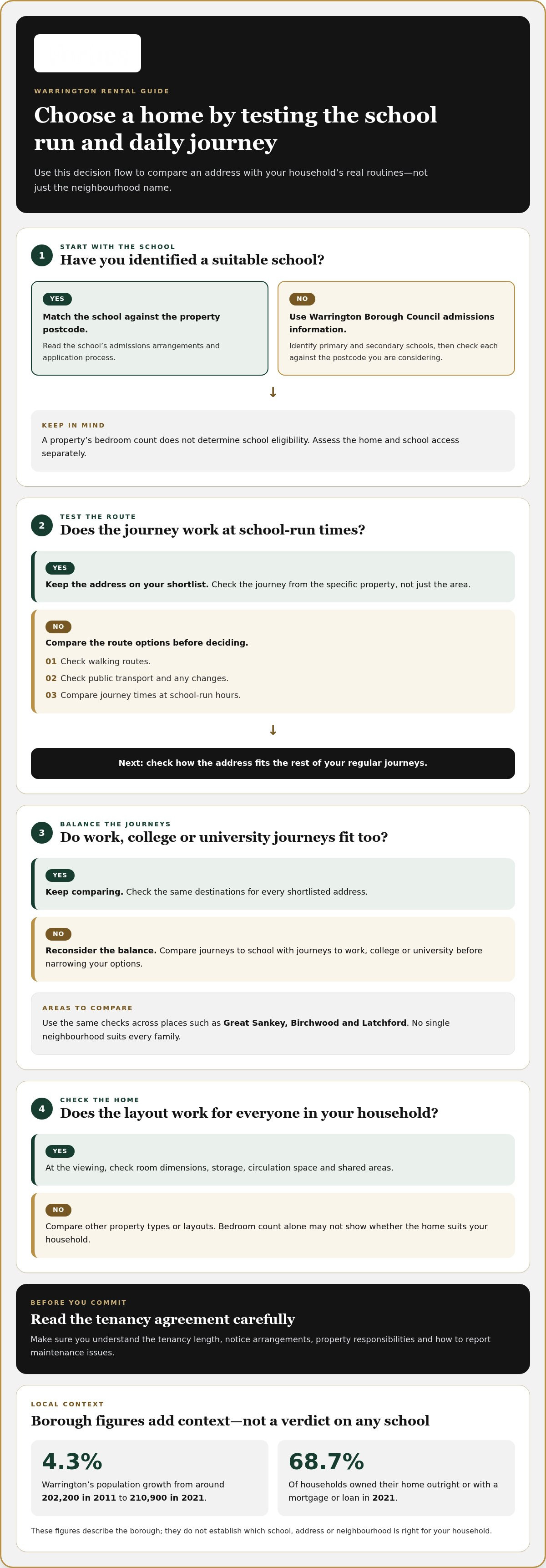
For families, school location can matter as much as the home when comparing the best areas to rent in Warrington. Start with the school your child may attend, then map the journey from each shortlisted address. A nearby school can simplify mornings, but distance alone doesn’t show whether the route suits your household. Check walking routes, public transport and journey times at school-run hours.
Warrington Borough Council’s admissions information is a practical starting point for identifying primary and secondary schools. Match each school against the postcode you’re considering, then read its admissions arrangements and application process. A property’s bedroom count won’t determine school eligibility, so assess the home and school access separately. If you’re relocating from London, compare local journey patterns with your current routine.
Warrington’s population grew by 4.3%, from around 202,200 in 2011 to 210,900 in 2021, according to Warrington Borough Council. That change gives context when comparing homes and schools across the borough. It doesn’t establish which school suits your child, so assess the individual school and address rather than relying on a broad impression of an area.
Housing tenure can also provide local context. In 2021, 68.7% of households owned their home outright or with a mortgage or loan, according to Warrington Borough Council. For renters, compare homes near schools with your household’s transport and space needs. A property close to one school may involve a longer journey to work or other regular destinations.
For a tenancy in England, read the agreement before signing and make sure you understand its terms. Pay particular attention to tenancy length, notice arrangements, responsibilities for the property and how to report maintenance issues. These details clarify what you and the landlord are expected to do during the tenancy.
Use a consistent shortlist for each property viewing:
Record suitable primary and secondary schools using the property postcode.
Map the route at school-run times, including public transport changes.
Compare journeys with work, college or university destinations.
Check how each bedroom and shared space meets your household’s needs.
Compare the same factors across areas such as Great Sankey, Birchwood and Latchford. School access, travel and housing needs are connected, but no single neighbourhood suits every family. A consistent comparison helps you prioritise the right balance before committing to a tenancy.
Average rent prices
Although rental amounts aren’t the focus here, the range of property types in Warrington helps explain why listings need careful comparison. Options include rooms in shared houses, studios, flats, apartments, terraced houses and larger family homes. Each offers a different balance of privacy, space and shared facilities. Start by deciding which type fits your household before reviewing individual properties.
For a compact home, look at studios and one-bedroom flats in central Warrington or WA1 and WA2. A studio combines living and sleeping space, whilst a separate bedroom can provide more division between rest and everyday activities. At a viewing, check storage, kitchen layout and whether the available space supports working from home.
Shared accommodation is another distinct option. Listings include rooms in houses around Bewsey Road, Gorsey Lane and Scott Street. View the room and shared areas, including the kitchen and bathroom. Consider how much privacy you need and whether the arrangements for shared spaces suit your routine.
For households needing more room, Warrington has examples of two-bedroom flats and houses, as well as homes with three or four bedrooms. Areas represented include Great Sankey, Birchwood, Orford and Walton. Bedroom count is only one measure of suitability: check room dimensions, storage, circulation space and whether the layout works for everyone living there.
Compare a shortlist using the same property details each time:
Record the property type, bedroom count and postcode.
Note whether accommodation is self-contained or shares facilities.
Check furnishings, storage and the condition of rooms during the viewing.
Consider how the layout supports your work, study and household routines.
Location also shapes which homes suit your plans. A central apartment may work for someone prioritising town-centre access, while a house in Great Sankey or Birchwood may better match a household seeking a different setting. Compare exact addresses and journeys rather than assuming properties in one district are alike.
Use property descriptions as a starting point, not a substitute for viewing. Confirm which rooms and facilities belong to the home, inspect the layout in person and note any questions about what is included. A consistent checklist makes it easier to compare different options and decide which Warrington rental property best matches your needs.
Local attractions and amenities
Warrington’s amenities matter most when they fit your regular routine. A home near the town centre may make central destinations easier to reach, while another address could better suit your work, family or leisure plans. Compare the places you expect to visit instead of choosing an area for one attraction alone. Weekday needs may differ from weekend plans.
Rivers Edge gives one clear example of how to assess location. It is a 10-minute walk from Warrington Bank Quay station and a 20-minute walk from Warrington town centre. Those distances provide a useful starting point for someone considering that development. They don’t describe every Warrington neighbourhood, so compare each property address against your own destinations.
For family leisure, Gulliver’s World is a named attraction to factor into your plans. It is a 15-minute drive from Rivers Edge. If you expect to visit regularly, consider the full journey from a shortlisted home, including how you would travel and whether the route works for everyone in your household. A nearby attraction can be a benefit, but everyday convenience depends on more than occasional outings.
Build an amenity checklist before booking viewings. Include the places you use most, such as food shops, healthcare, public transport, leisure facilities and work or study destinations. Compare the same categories for each address. This shows whether a property suits your lifestyle, rather than relying on broad descriptions of an area.
Mark your regular destinations on a map for each property address.
Compare walking, driving and public transport options for the journeys you make often.
Separate daily requirements from occasional attractions, such as Gulliver’s World.
Consider how the route changes at the times you usually travel.
Use Warrington town centre as a reference point, not a universal measure of convenience. A home farther away may suit you if your work, education or preferred facilities are elsewhere. Conversely, a central address may not shorten the journeys that matter most. List your priorities in order, then assess how each location supports them.
At a viewing, look beyond the property entrance. Walk the nearby streets, note how you would reach the closest transport connection, and consider the route home after evening activities. For a Rivers Edge viewing, for example, assess the walk to Bank Quay and the town centre as two separate journeys. Apply the same method to every shortlisted home.
Compare amenity access with the property itself. A convenient location can’t compensate for a layout that doesn’t suit your household, while a well-sized home may involve longer journeys. Put your essentials first, then weigh leisure access and town-centre convenience against them. This practical comparison helps identify which Warrington location works for everyday life.
Neighbourhoods and surrounding areas
For station access, compare the exact address with your usual route. A Winmarleigh Street listing was 0.2 miles from the nearest station; a Station Road listing was 0.1 miles away. These examples give a clearer commute comparison than neighbourhood names alone.
Those distances show that Warrington town-centre and WA5 addresses can sit close to rail connections. Check the station serving each property, your onward journey and the times you travel. A short walk to a station doesn’t establish the full commute time to work or education.
Warrington offers contrasting settings across areas including Walton, Moore, Great Sankey and Birchwood. In Walton, a three-bedroom detached bungalow is one example of a larger home. Moore has semi-detached house listings, while Great Sankey includes houses and apartments. Birchwood also has larger house options.
No single area suits every family’s school requirements. Start with the school you’re considering, then compare its location with specific homes in Walton, Moore or Great Sankey. A larger property doesn’t by itself mean the school journey will work for your household.
Property style can help narrow your search. A townhouse in Rose Creek Gardens differs from a bungalow in Walton or an apartment near the centre. Think about stairs, storage, outdoor space and how bedrooms will be used. These practical details can matter as much as the neighbourhood when choosing a home.
Use a consistent comparison for each area:
Write down the full address and postcode for every shortlisted property.
Map the route to your workplace, school or education destination.
Compare the nearest station and the distance from the property.
Check whether the layout and bedroom count suit your household.
Surrounding areas can also broaden your search. Moore and Grappenhall sit beyond the central streets, while WA5 listings include locations such as Great Sankey. Compare the places you’d travel to regularly, rather than assuming a nearby district offers the same access or routine.
Revisit your shortlist at the times you’d normally commute or make school journeys. Walk from the property to its station, where relevant, and note differences between weekday and weekend travel. Comparing addresses this way helps you weigh transport, home layout and daily destinations before choosing where to rent.
Town-centre and WA5 addresses offer the clearest examples of nearby rail access, including properties on Station Road and Winmarleigh Street. The best full commute depends on the specific destination and travel time, so compare routes from each shortlisted address.
Schools, employment and education
Choose a Warrington rental by mapping the journeys that shape your week. Start with your workplace, school or college, then compare shortlisted postcodes in Birchwood, Great Sankey and Latchford. A neighbourhood’s name alone can’t show your door-to-door journey. Include the walk to a station, waiting time and onward travel when comparing addresses.
If you commute by rail, identify the station you’ll actually use before choosing an area. Warrington Bank Quay is a reference point for some journeys, but the best route depends on your destination and travel times. From each property, assess how you’ll reach the station and continue to work. A short walk to the station doesn’t necessarily mean a short overall commute.
Employment patterns can make two similar homes work differently. If your workplace is in Warrington town centre, compare travel from areas such as Orford and Great Sankey. If you work elsewhere, map that destination instead. Include shift start times, parking needs and public transport connections rather than assuming the town centre is your only important journey.
Families and students should map education journeys separately from work travel. Compare specific property postcodes in Moore, Appleton or Chapelford with the school, college or campus you need to reach. Check the route at the relevant time of day. An apartment that suits one commuter may create a difficult school run for another household.
Use this checklist for each address:
Enter the full postcode and destination into a journey planner.
Record the route to work, including any station changes or transfers.
Map school, college or university journeys separately.
Compare walking, driving and public transport options where relevant.
Repeat the comparison for each shortlisted area, including Birchwood and Latchford.
Education access also depends on your household’s needs. A parent may prioritise a manageable school journey, while a student may value straightforward travel to classes and part-time work. List those destinations first. Then compare homes in Great Sankey, Chapelford and central Warrington against the same priorities, rather than changing your criteria for each listing.
Test the practical details before committing. Check the first and last parts of each commute, not only the train or bus leg. Note how you’ll reach the station, how often you need to travel and whether the route suits your normal schedule. A consistent comparison helps you judge how each Warrington area supports work, school and further education.
Nicholson Lettings: Fully Furnished Luxury Apartments
Nicholson Lettings offers a practical next step if you’re seeking a managed, furnished home after comparing Warrington neighbourhoods. Fully Furnished Luxury Apartments can help reduce the work involved in setting up a home, particularly when relocating or moving for work. The Deposit Alternative Scheme and Flexible Tenancy Agreements are also available, alongside Dedicated Maintenance Services.
Consider these options if convenience, furnished accommodation and ongoing maintenance support matter in your rental search. Before committing, review the property details and tenancy terms so you understand what’s included and the arrangements that apply to your home.
To discuss your rental needs, contact Nicholson Lettings.
Make your Warrington shortlist work for you
Finding the best areas to rent in Warrington is a personal decision shaped by the routine you want your new home to support. Before moving forward, narrow your shortlist to homes that match your priorities, then read each property description and tenancy terms carefully. This gives you a clearer basis for deciding which option fits, rather than being rushed by a promising first impression.
Keep your decision grounded in what you need from a home now and what may change later. Consider how much flexibility you need, which features will make settling in easier and what questions you want answered before committing. A considered shortlist can make the next stage more manageable.
If you’re considering a move to the area, Nicholson Lettings can help you explore its rental options and understand the support available. Use the “Find Me a Home” form to share your requirements and focus your search on a home that fits your plans.
Contact Nicholson Lettings to discuss your next move and take the first steps towards a home that suits you. Your Warrington search can start with a practical plan and a confident next step.
Frequently Asked Questions
Is Warrington safe to live in?
Safety depends on the specific street, building and your daily routine, so assess an address on its details. During a viewing, notice entrances, lighting and the route to nearby transport. Consider how you’d travel home after work or evening plans, and whether the building’s access arrangements suit you. A neighbourhood name alone can’t establish whether a particular property feels right for your household.
Which areas of Warrington are best for renters?
The best areas to rent in Warrington depend on your priorities and the home available. Compare locations such as the town centre, Great Sankey, Birchwood, Latchford and Stockton Heath against your work, study and household needs. Look at the property as well as its surroundings: layout, bedrooms, transport access and regular journeys all shape whether an area is a practical fit.
What are average rents in popular Warrington neighbourhoods?
There isn’t one average that helps every renter choose a neighbourhood. First decide what kind of home suits your household, then compare the features and location of relevant properties. A studio, a room in shared accommodation and a family house offer different layouts and levels of privacy. Consider your commute, available space and local routine to narrow your search to homes that meet your needs.
How do Stockton Heath, town centre, Great Sankey and Lymm compare for renting?
These locations offer different property choices. Stockton Heath has flat examples, Great Sankey includes flats and houses, and central listings include studios and apartments. In Lymm, compare each address against your commute, household requirements and local routine rather than assuming it matches another area. Check the property’s layout and transport options alongside its location before deciding which suits you best.
Which areas are most convenient for shops, restaurants and nightlife?
The town centre is a sensible starting point if you want central shops, dining and evening options close to home. Stockton Heath may suit renters who prefer to consider village-centre destinations. For either location, map the routes you’d use and consider how you’ll get home after an evening out. Convenience depends on the specific address and the places you visit most often.
Which Warrington neighbourhoods are safest, based on recent crime statistics?
A useful safety comparison needs recent, comparable crime figures for each neighbourhood, including offence types and the period measured. A broad label can mislead, since recorded incidents don’t describe every street or home. Assess the exact address and the routes you’ll use, including entrances, lighting and transport links. This gives you practical context alongside any area-level statistics you consult.
What types of rental properties are available in Warrington, and how do prices vary?
Warrington has rooms in shared houses, studios, flats, apartments and houses with multiple bedrooms. The right type depends on how much privacy, space and shared facilities suit your household. A room in a shared home differs from a self-contained apartment, while houses may offer more bedrooms and separate living areas. Compare layouts and property features to identify options that fit your day-to-day needs.
Are there good rental options near Warrington Hospital, the town centre and business parks?
To find a suitable option, start with the destination postcode and compare specific rental addresses against your daily route. Check whether the journey involves a walk, station connection or drive, and assess it at the times you’d travel. The town centre has varied property types, but proximity to a hospital or business park depends on the individual address. Prioritise commute practicality and home suitability together.