How to Get Your Full Security Deposit Back: A Renter’s Guide

You hand back the keys believing the property is in good order, then a deduction appears with little explanation. It’s stressful, especially when you’re unsure whether a mark counts as damage or what evidence your landlord should provide. Knowing how to get your full security deposit back starts before move-out: keep clear records, communicate in writing and compare any proposed deductions with evidence of your own.
You can’t control every decision, and a full refund isn’t guaranteed. But a clear, evidence-led process can help you challenge unfair deductions and understand your options if repayment stalls. This guide explains how to prepare the property and your paperwork, assess cleaning or damage claims, request supporting evidence and use your deposit protection scheme’s dispute route if you can’t reach agreement.
Whether you’re moving from a furnished flat in Liverpool, St Helens, Wigan, Manchester, Salford or Warrington, a well-managed handover can make the process clearer. Here are practical steps to take before returning the keys and ways to respond afterwards.
Table of Contents
How to get your full security deposit back: start before moving out
Build a clear evidence record of your rental home’s condition
Challenge proposed deposit deductions with facts, not guesswork
Follow the repayment process and escalate a deposit dispute carefully
Renting with Nicholson Lettings: understand deposit and deposit-alternative arrangements
How to get your full security deposit back: start before moving out
A full repayment is more achievable when you prepare before handing back the keys. Your deposit isn’t automatically lost because your tenancy is ending. The aim is to leave the home in line with your tenancy terms and make it easy to compare its condition at move-in and move-out. A calm, documented handover can also help resolve questions before they become a disagreement.
This guidance focuses on England. Deposit rules and processes can differ across the UK, so check which nation’s rules apply to your tenancy. For general background on the purpose of a rental deposit and common issues, see Understanding Security Deposits; use the rules for your jurisdiction when deciding what applies to your situation.
What should you check in your tenancy documents?
Find the deposit amount, the stated repayment process and any agreed requirements about cleaning or the property’s condition. Check who holds the deposit and whether your paperwork names a protection scheme. If a term is unclear, raise it early in writing and keep both your question and the response. This gives you a record of what was discussed and agreed.
How can you prepare for a smooth handover?
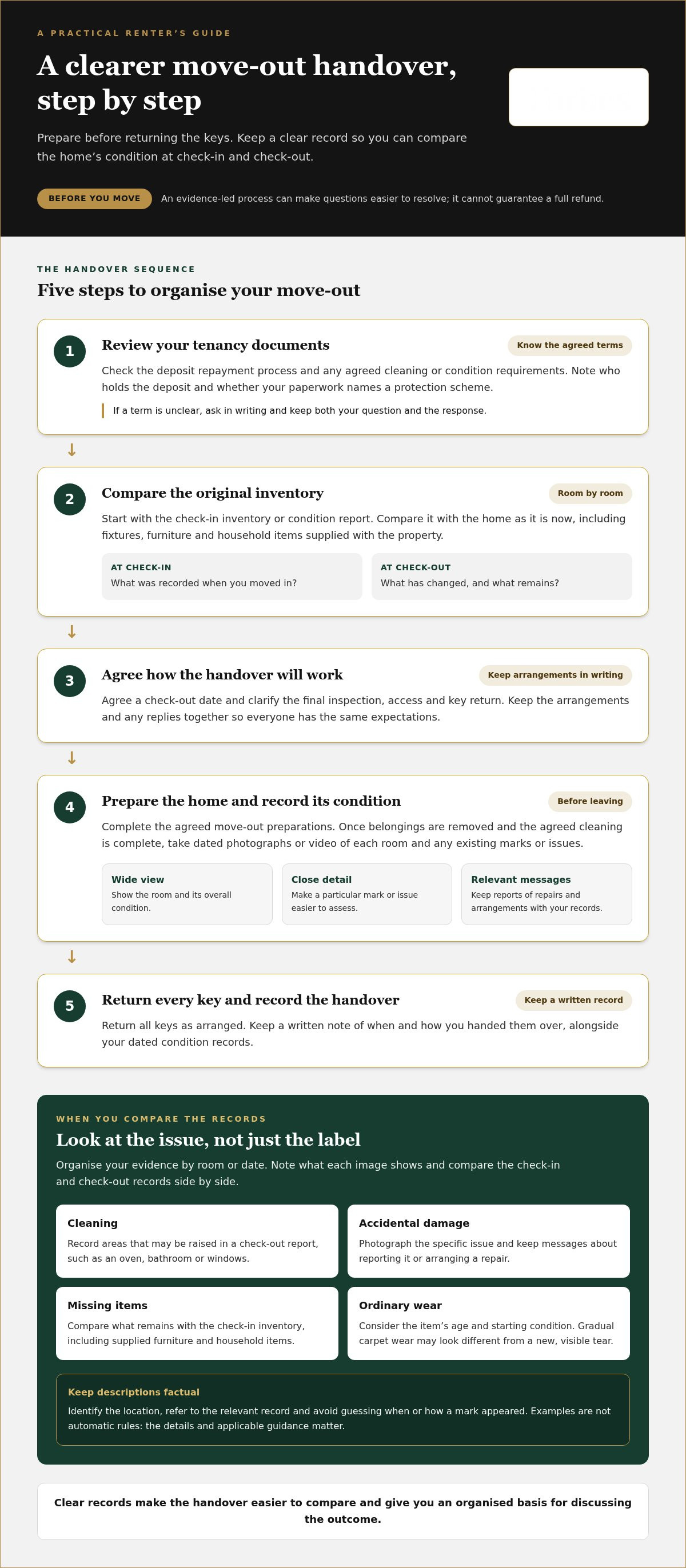
Start with the check-in inventory or report, before cleaning or moving your belongings. It gives you a reference for what was recorded when you moved in. Then agree a check-out date and clarify how the final inspection, access and key return will work. Keep the arrangements in writing so everyone has the same expectations.
Use this order to organise the move-out:
Review your tenancy documents and note any condition or cleaning requirements.
Compare the original inventory with the home as it is now, room by room.
Ask about unclear terms or handover arrangements and retain the written replies.
Complete your agreed move-out preparations and record the property’s condition before leaving.
Return every key as arranged and keep a written record of when and how you handed them over.
Take dated photographs or video after your belongings have been removed and the agreed cleaning is complete. Capture each room, along with any existing marks or issues. If you’ve reported a repair during the tenancy, keep the relevant messages with your handover records. These details show what the property looked like when you returned it, rather than leaving you to rely on memory later.
Preparation and dated records make the handover a clearer comparison of the home’s condition. They don’t guarantee a full refund, but they give you an organised basis for discussing the outcome. Allow enough time to complete these steps before returning the keys, rather than trying to reconstruct the details after you’ve moved.
Build a clear evidence record of your rental home’s condition
A useful evidence record lets you compare the home at check-in with its condition at check-out, rather than relying on memory after you’ve moved. Keep the original inventory or condition report alongside your own dated notes, images and relevant messages. Clear comparisons can help explain whether an issue was already present, appeared during your tenancy or reflects gradual use.
Which records are useful at check-in and check-out?
Keep the inventory, condition report and written notes together in a folder you can access easily. Take clear, dated photographs or videos of rooms, fixtures and items included with the home. If relevant to your tenancy, record meter readings and the date and method of key handover. Add notes to identify what each image shows, such as a mark on a worktop or a scuff on a door.
Cleaning: Record areas that may be raised in a check-out report, such as an oven, bathroom or windows, and keep any relevant cleaning records.
Accidental damage: Photograph the specific issue and retain any messages reporting it or arranging a repair.
Missing items: Compare the check-in inventory with what remains, including furniture or household items supplied with the property.
Ordinary wear: Note changes that appear gradual, and compare them with the item’s recorded condition when you moved in.
How do you distinguish damage from ordinary wear?
Consider the item’s age and condition at check-in, as well as how long you’ve lived in the property. For example, gradual carpet wear may look different from a new, clearly visible tear. These examples aren’t automatic rules for deciding a deduction: the details and applicable guidance matter, especially in borderline cases. Compare the records rather than relying on broad assumptions about what is always acceptable.
When an issue is raised, put the check-in and check-out records side by side and note what each shows. A wide photograph can establish the room, while a closer image may make a particular mark easier to assess. Keep original files where possible and organise them by room or date so you can find the relevant evidence quickly.
Good evidence should show both what the issue is and when it was recorded. That distinction helps make your account clearer if you need to respond to a proposed deduction. Keep your description factual: identify the location, refer to the relevant record and avoid guessing about when or how a mark appeared.
If you rent a managed furnished home, keeping maintenance messages with your condition records can make the history of reported issues easier to follow. Nicholson Lettings provides a dedicated maintenance team and tenant support. Explore managed furnished homes across the Liverpool City Region and wider North West.
Challenge proposed deposit deductions with facts, not guesswork
A proposed deduction can feel difficult to challenge, particularly when you’re already focused on moving. Start by asking for a separate explanation of each item and the evidence behind it. An itemised response gives you something specific to compare with your tenancy records, rather than leaving you to assess a general statement about the property’s condition.
What should you do when a deduction seems unfair?
Review each claim against your check-in inventory, check-out notes and dated photographs. Keep your reply calm and in writing. State which points you accept and which you dispute, then explain why with references to your records. This keeps the discussion focused on individual issues and creates a clear account of what you’ve asked the landlord or agent to consider.
Use a simple comparison to organise your questions:
How should you assess cleaning or damage claims?
Compare the condition reported at the end of the tenancy with the record from the start. For a cleaning claim, ask which area or task is said to need attention, then compare that specific point with your check-out evidence. For damage, identify the item and compare its recorded starting condition with the later record. A request for cleaning or repair isn’t automatically unfair; the details and supporting evidence matter.
Keep the issue separate from any proposed work. Ask what condition was observed, when it was recorded and what evidence supports the claim. This helps you assess whether the reported issue is documented, without assuming a stated deduction is justified simply because it appears in a check-out summary. If part of a claim is clear but another part isn’t, address each separately.
In your written reply, be precise: “I dispute the cleaning claim for the kitchen worktop because the check-out photograph shows it clean.” Adapt the wording to match your own records; don’t state more than your evidence supports. If you can’t confirm or challenge a point yet, say what information you still need. This measured approach is central to how to get your full security deposit back, although it can’t guarantee a particular outcome.
For renters who value clear communication and managed support throughout a tenancy, Nicholson Lettings’ furnished homes offer a local option across the Liverpool City Region and wider North West.
Follow the repayment process and escalate a deposit dispute carefully
Once your tenancy has ended, keep the repayment process clear and in writing. The route can depend on your tenancy and deposit arrangements, so identify the protection scheme named in your documents and check its current instructions. In England, the recognised schemes are the Deposit Protection Service (DPS), MyDeposits and the Tenancy Deposit Scheme (TDS). Verify the scheme name, your eligibility and the current process before taking action.
An agreed repayment and a formal dispute are different steps. Where you and your landlord agree what will be returned, the deposit should be repaid within 10 days of that agreement. A dispute applies when you can’t agree about proposed deductions. The repayment period doesn’t begin simply because you moved out.
Request repayment. Write to your landlord or agent, confirm that the tenancy has ended and ask for the deposit repayment to be arranged. Keep a copy and a record of when you sent it.
Review the response. If deductions are proposed, ask for an itemised explanation and supporting evidence for each one. Compare the details with your records.
Set out your position. Reply in writing, identifying the deductions you accept and those you dispute, with a brief explanation for each.
Consider the scheme route. If you can’t reach agreement, check the relevant scheme’s current dispute guidance and follow its instructions if the route applies to your circumstances.
What if the landlord or agent does not respond?
Keep the original request, any replies and evidence of when messages were sent. If there’s no response, send a concise follow-up stating what action you’re seeking. You may set a reasonable response date where appropriate, but don’t assume that a particular deadline applies to every tenancy or scheme. Before escalating, check the current guidance for the scheme protecting your deposit.
When might a deposit dispute route be appropriate?
A scheme’s dispute resolution service may be an option when you and the landlord can’t agree over deductions. Check that the service applies to your deposit and that both parties can use it. In England, the three government-approved schemes offer alternative dispute resolution, but their instructions and time limits can differ. Check directly with the relevant scheme and consult current GOV.UK guidance for information about your rights.
Prepare records that explain your position. These may include the tenancy agreement, check-in inventory, check-out report, dated photographs, written messages and the landlord’s deduction breakdown. Organise them by issue and submit only what the scheme requests, following its format and deadline. Don’t assume every scheme uses the same evidence process. The decision reached through a scheme’s adjudication process is final, so read the procedure carefully before agreeing to use it.
Following the right steps gives you a clearer route for how to get your full security deposit back, but no process guarantees a particular outcome. For support with a managed tenancy and clear communication, explore Nicholson Lettings’ furnished homes.
Renting with Nicholson Lettings: understand deposit and deposit-alternative arrangements
This guide is about a conventional tenancy deposit: money paid at the start of a tenancy that may be returned when the tenancy ends, subject to any agreed deductions. If you’re working out how to get your full security deposit back, first identify which arrangement applies to your tenancy, then follow the relevant repayment or dispute process.
How is a deposit alternative different from getting a deposit back?
A deposit-alternative scheme is a different rental arrangement, not a conventional cash deposit waiting to be refunded. Its terms and process aren’t the same as requesting repayment of a protected tenancy deposit, so don’t assume the same steps apply. For a brief overview, see the guide to Luxury Apartments in Liverpool with No Deposit, and refer to your own tenancy documents for the arrangement that applies to you.
Check your paperwork before making a repayment request. Look for references to a deposit, a deposit protection scheme or a deposit-alternative arrangement. If you’re unsure which applies, raise the question in writing with the person managing your tenancy and keep their response. This helps you direct your request to the right process and avoid treating an alternative arrangement as money that should be repaid like a conventional deposit.
Where can renters find support during a tenancy?
Nicholson Lettings’ dedicated Tenant Liaison Officer is a point of support for tenant queries. For questions about a repair or the property’s condition, the maintenance team may also be relevant. Keep repair reports and responses with your tenancy records, particularly if they relate to an issue later mentioned during a move-out discussion.
Clear communication can make the steps easier to manage. Describe the issue, include relevant dates and keep copies of messages. If you’re asking about a conventional deposit, distinguish that request from any repair or maintenance query so each can be handled clearly. Keep the details factual and refer to your tenancy documents where helpful.
Renting a furnished home also means keeping track of the condition of supplied furniture and items, as well as the property itself. Your check-in records and maintenance messages can help establish what was reported during the tenancy. They don’t replace the scheme’s own process, but an organised record can make it easier to explain your position if questions arise at move-out.
If you’re planning your next move, Nicholson Lettings offers furnished rental homes across the Liverpool City Region and wider North West, with tenant support during your tenancy. Explore the available homes and support at a pace that suits you.
Make your next move with confidence
Moving home is a fresh start, and a well-managed tenancy can make the practical details easier to handle. As you plan your next step, look for clear communication and support that helps you feel settled, rather than left to work everything out alone. Nicholson Lettings manages over 250 properties across the Liverpool City Region, with tenant support to help make renting more straightforward.
Keep your tenancy documents and property records organised as you move, and raise questions early if anything is unclear. That gives you a useful foundation for managing the next handover and helps you feel more prepared from the outset. Understanding how to get your full security deposit back is one part of renting with confidence; choosing a home with professional support can also make day-to-day renting feel more manageable.
If you’re considering your next home, explore renting with Nicholson Lettings and find a furnished property suited to your plans. Get in touch to start your search and find a home with support throughout your tenancy.
Frequently Asked Questions
Can I get my full security deposit back if the property is not spotless?
Yes, a property not being spotless doesn’t automatically mean you’ll lose part of your deposit. Check what your tenancy agreement says about cleaning and compare the condition at check-out with the check-in record. For example, a landlord may raise a specific concern about an oven or bathroom, but ask for the issue to be identified clearly. Your records can help explain the property’s condition when you left.
How long does a landlord have to return a tenancy deposit in England?
In England, once you and your landlord agree how much of the deposit will be returned, it should be repaid within 10 days of that agreement. This period doesn’t begin automatically on your move-out date. If you haven’t agreed on proposed deductions, write to the landlord or agent to clarify the outstanding points. If repayment then stalls, check the current instructions from the scheme protecting your deposit.
Can a landlord deduct money for fair wear and tear?
A landlord shouldn’t treat gradual deterioration from ordinary use as though it were automatically damage. The condition and age of an item at the start of the tenancy, and how long you lived there, can help explain changes. For instance, gradual fading may differ from a fresh stain. No single example decides every case, so compare the evidence and ask for a clear explanation of any proposed deduction.
What should I do if my landlord refuses to return my deposit?
Make a written request for repayment and ask for an itemised explanation of any deductions. Keep copies of your messages and replies. If you can’t reach agreement, identify the scheme holding or protecting the deposit and read its current dispute guidance. In England, the government-approved schemes provide dispute resolution, but the process and time limits depend on the scheme and your circumstances. Consider independent housing advice if you need help understanding your rights.
How do I check whether my tenancy deposit is protected?
Look through your tenancy paperwork and any prescribed information for the scheme’s name and your deposit details. In England, landlords must protect a tenancy deposit in an approved scheme and provide the required information within 30 days of receiving it. The approved schemes are the Deposit Protection Service, MyDeposits and the Tenancy Deposit Scheme. If you can’t find the details, use the schemes’ current deposit-checking guidance or seek independent advice.
Can I dispute a deposit deduction after moving out?
Yes, you can dispute proposed deductions after you’ve moved out if you and your landlord can’t agree. First request repayment and explain in writing which deduction you challenge. Then check whether the scheme covering your deposit offers a dispute service for your situation, and note its current deadline. Don’t leave it until the end of a move or another tenancy; scheme time limits may apply, and procedures can vary.
What evidence should I provide in a tenancy deposit dispute?
Provide records that relate directly to the disputed points. These may include your tenancy agreement, check-in inventory, check-out report, dated images, repair messages and the landlord’s itemised explanation. For example, if a deduction concerns a damaged fixture, include the record of its starting condition and any messages about it during the tenancy. Follow the relevant scheme’s instructions on accepted formats and what to submit, as requirements can differ.