
Flat Viewing Checklist: Questions to Ask

Updated: Oct 6
A flat that feels right during a quick viewing can still leave important questions unanswered. It’s easy to miss signs of disrepair or assume something is included. The questions to ask when viewing a flat to rent help you look beyond first impressions and gather details you can check later.
It’s understandable to feel pressure to decide quickly, especially when you’re arranging a move. A clear checklist can help you inspect the home, clarify the tenancy and find out who to contact if something needs attention. You’ll leave with practical answers, not just a good impression.
Use this guide to check the flat’s condition, confirm which furnishings and appliances are included, and ask how repairs and tenant support are handled. It also covers tenancy terms, payments and responsibilities, so you can compare what you’ve been told with the listing. If you’re viewing a furnished home with Nicholson Lettings, ask how its dedicated maintenance team and Tenant Liaison Officer support residents, and confirm the arrangements for that particular property.
Table of Contents
Before viewing a flat to rent: prepare the questions that matter
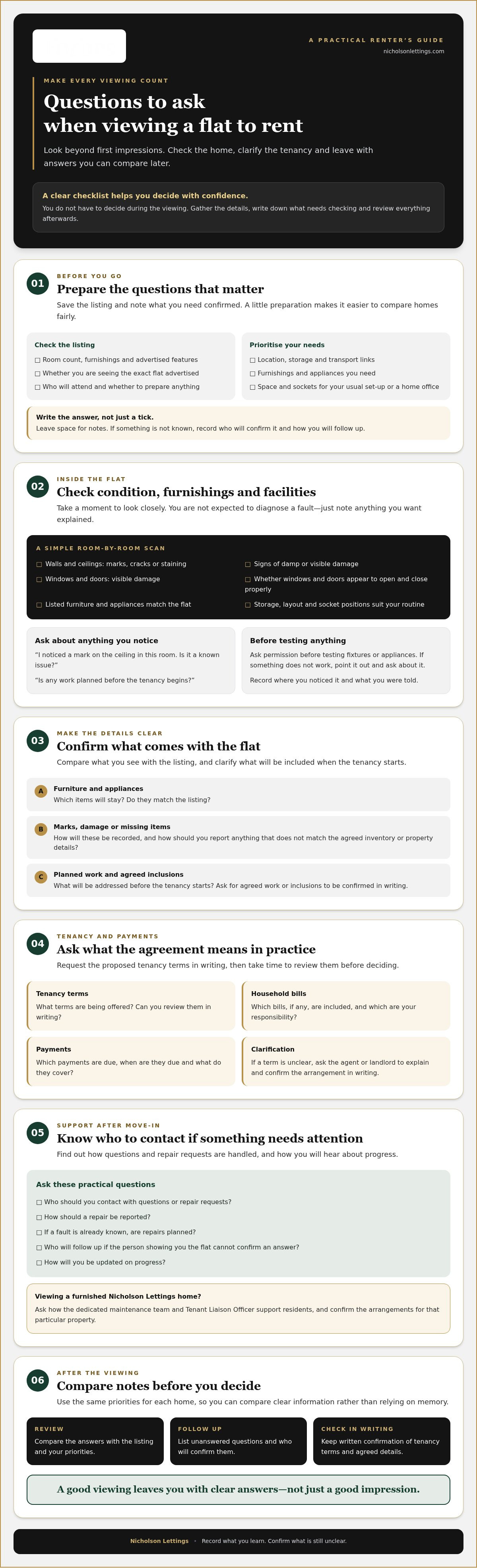
A little preparation makes a short viewing more useful and helps you compare homes fairly. Save the listing and note anything you need confirmed, such as which furnishings are included, whether the space suits your routine, or whether there’s room for a home office. Prioritise what matters most to you, such as location, furnishing, storage, transport links or somewhere to work. Whether you are searching locally or exploring prime rental markets abroad with specialist agencies such as LE Properties, establishing your core criteria early ensures you ask the right questions from the outset.
Turn your notes into practical questions to ask when viewing a flat to rent. Leave space beside each question to record the answer, and mark anything that needs checking afterwards. You might ask, “Could you clarify what’s included?” or “Would you be able to confirm that for me?” You’re there to gather information, not to decide before you’re ready.
Which details should you confirm before the appointment?
How can you make a viewing checklist that works?
Use a notes app or paper checklist, whichever is easiest to update during the visit. Group questions under simple headings so you can find the answers later:
The flat: Which furniture, appliances and features are included?
The tenancy: What terms are being offered, and can you review them in writing?
Bills: Which household bills, if any, are included, and which are your responsibility?
Ongoing support: Who should you contact with questions or repair requests?
Write down the answer, not just a tick. If something isn’t known during the viewing, note who will confirm it and how you’ll follow up. That makes it easier to compare the information later instead of relying on memory.
Tenancy terminology can vary across older online guidance and current information. If you encounter references to an Assured Shorthold Tenancy (AST), treat them as background rather than an explanation of the terms being offered now. Ask the agent or landlord to confirm the proposed tenancy arrangements in writing, and take time to review them before deciding. Asking for clarification is a sensible part of the process.
What to check inside a rented flat: condition, furnishings and facilities
A flat can look well presented at first glance, so take a moment to check the details. Look over walls and ceilings for marks, cracks, staining or signs of damp. Check around windows and doors for visible damage, and notice whether they appear to open and close properly. You’re not expected to diagnose a fault. The aim is to spot anything you want explained before you decide.
Only test fixtures or appliances if the person showing you the flat gives permission. If a tap, light, cupboard door or listed appliance doesn’t work, point it out and ask about it. Include questions about whether visible faults or unfinished work are already known, whether repairs are planned, and how you’ll be updated on progress.
What questions should you ask about the flat’s condition?
Be specific and courteous. For example: “I noticed a mark on the ceiling in this room. Is it a known issue?” or “Is any work planned before the tenancy begins?” Record where you noticed each concern and the answer you receive. If the person showing you the flat can’t confirm the details, ask who will follow up and request a clear response afterwards.
For general tenant information, GOV.UK provides a page for its former ‘How to rent’ guide. Guidance can change, so check current government information rather than relying on an older copy.
What should you check in a furnished flat?
Compare the furniture and appliances in the flat with the listing. Ask which items will stay, and check that the layout works for how you’ll use each room. Is there enough storage for your belongings? Are sockets placed conveniently for your usual set-up? If you need a home office, consider whether you can fit a desk without making the space difficult to use. For renters exploring flexible or turnkey living arrangements, serviced accommodation specialists like flexiestays.com illustrate the standard of furnishings and conveniences that fully managed properties can offer.
Ask how existing marks, damage or missing items will be recorded when you move in, and how to report anything that doesn’t match the agreed inventory or property details. Confirm what will be addressed before the tenancy starts, and ask for agreed work or inclusions to be confirmed in writing. Property-specific details can vary, so check them with the relevant agent or landlord.
Clear answers about furnishings and maintenance can make a furnished home easier to assess. If you’re exploring furnished homes from Nicholson Lettings, confirm the contents and support arrangements for the specific flat you’re viewing.
Questions about the tenancy, payments and responsibilities
A flat may suit your needs, but the agreement and ongoing responsibilities matter as much as its layout. Ask for the proposed tenancy terms in writing and allow yourself time to read them before committing. Clear answers now can help you understand what you’re agreeing to, rather than relying on assumptions made during a viewing.
What should you ask about the tenancy agreement?
Ask what tenancy arrangement is being offered, when it could start and whether any conditions apply. Clarify how notice works and what you’ll be responsible for during the tenancy, including looking after the flat and reporting problems. If any wording is unclear, ask who can explain it before you sign. You could say, “Could you send me that detail in writing so I can review it properly?”
Read the agreement at your own pace. Check that the written terms reflect what you’ve been told, and note anything that needs explaining. For another reference, GOV.UK’s official government guidance for renters sets out points to consider when renting in England. The agreement for the specific flat is what you should check to understand its terms.
How can you clarify bills, deposits and included items?
Ask which household bills or services are included, which you’ll need to arrange yourself, and whether any furnishings or appliances are provided. Request a written breakdown of each required payment, when it’s due and what it covers. This gives you a clear record to review instead of relying on a verbal summary.
Ask whether the arrangement involves a tenancy deposit or a deposit-alternative scheme, and request the relevant terms in writing. If a deposit is required, clarify how it will be handled and what process applies at the end of the tenancy. If an alternative is available, ask how it works, what you’re agreeing to and whether any responsibilities continue to apply. Don’t assume the options are the same across properties.
For more background before comparing arrangements, read this guide to deposit alternatives. Confirm the specific scheme, tenancy terms, included bills and payment details directly with the relevant team for the flat you’re considering. One of the most useful questions to ask when viewing a flat to rent is simply: “Could you confirm that in writing?”
Questions about repairs, safety information and support after move-in
A useful viewing should tell you not only what the flat is like today, but also how to get help if something needs attention after you move in. Ask who handles maintenance, which contact route to use and how you’ll hear about progress. A clear process makes it easier to report an issue and understand what happens next.
Who should you contact when something needs attention?
Confirm the correct contact for routine repair requests and ask what to do if an emergency repair is needed. Find out how to report an urgent fault, what details to include and whether you should send photos. If work can’t be completed straight away, ask how updates are shared and who you can contact for clarification.
You could also ask whether there’s a tenant liaison contact to help direct queries. Nicholson Lettings has a dedicated Tenant Liaison Officer and an in-house maintenance team, but support arrangements can vary by property. Confirm the contact process for the flat you’re viewing, including how repair requests are logged and followed up.
What safety information is reasonable to ask about?
Ask which safety documents or checks relate to the property and whether you can view the relevant records. For example, ask whether an Electrical Installation Condition Report is available. In a furnished flat, you can also ask whether portable appliances have undergone PAT testing. If a document uses unfamiliar terms or you’re unsure what a check covers, ask the agent or landlord who can explain it.
Keep your questions practical and specific. You might ask:
Who should I contact to report a routine repair?
What should I do if an emergency repair is needed?
How will I receive updates if work is delayed?
Which safety records can I review for this property?
Write down the answers and note any points that still need confirmation. Nicholson Lettings’ Liverpool flat maintenance case study offers an example of managed maintenance. If you’re viewing a furnished home with dedicated maintenance services, ask Nicholson Lettings about repair support and tenant liaison, then confirm the arrangements for the specific flat before deciding.
After the Viewing: Compare Notes and Decide Next Steps
Once you’ve seen a few flats, details can blur together. Use your viewing notes to compare what you know, what you liked and what still needs confirming. This gives you a calmer basis for deciding than relying on memory or a first impression alone.
How do you compare flats after several viewings?
Use the same practical criteria for each property, then judge them against your own priorities rather than a universal score. You could give each area a simple rating or mark it as suitable, unsuitable or still to confirm. Keep confirmed facts separate from impressions and unanswered questions.
Location: Does it work for your commute and daily routine?
Furnishing and layout: Does the space suit your needs, including any home office requirements?
Condition: What did you notice, and were any repairs or follow-ups discussed?
Tenancy: Do the written terms and responsibilities make sense to you?
Support: Are the repair contact and process clear?
A flat may suit you well for its location while details about repairs are still awaiting an answer. Record that uncertainty rather than treating it as a confirmed problem or assuming it will be resolved. If you’re considering managed furnished options in Liverpool, the Liverpool furnished-apartment guide can help you explore what to look for.
What should you do before moving an application forward?
Review your notes, list unanswered questions and send a concise follow-up to the agent or landlord. Ask for important details, such as what’s included, the proposed tenancy terms or agreed repair work, to be confirmed in writing. Check those answers alongside the listing and tenancy information before deciding to progress. If a response is unclear, ask for clarification instead of filling in the gaps yourself.
The questions to ask when viewing a flat to rent don’t end when you leave the property. A brief, clear follow-up helps you check that your understanding matches the information provided. Keep the replies with your viewing notes so you can refer back to them when comparing your options.
If you’re looking for a furnished home in the Liverpool City Region or nearby, Nicholson Lettings has an online property-search request form. Explore Nicholson Lettings’ property search service and confirm the details of any suitable flat directly with the team.
Make your next viewing count
A confident renting decision comes from clear information, not a polished first impression. Prepare the questions to ask when viewing a flat to rent, inspect the condition and furnishings carefully, and ask for tenancy terms, payment details and repair arrangements in writing. After each visit, compare the answers against your priorities and follow up on anything still unclear.
The right home should fit your day-to-day needs, with support you understand before moving in. Nicholson Lettings manages over 250 properties across the Liverpool City Region, with a dedicated Tenant Liaison Officer and an in-house maintenance team. Confirm the details and support available for any specific property directly with the team.
Looking for a furnished home? Find a furnished home with Nicholson Lettings and take your next step with greater clarity. With a practical checklist and the right questions, you can approach your search with confidence.
Frequently Asked Questions
Is it okay to ask about damp during a flat viewing?
Yes, it’s fine to ask about damp during a flat viewing. Calmly mention any marks, musty smells, condensation or areas that look recently repaired, and ask whether the issue is known. A short visit can’t establish the cause, so don’t treat an appearance as proof. Note the location and request a clear answer in writing. If the explanation is unclear, follow up before deciding whether to apply.
What should I check in a furnished flat before renting it?
Compare the furniture and appliances you can see with the listing, then ask which items will remain. Check that the layout, storage and facilities work for your everyday needs. Ask how the condition of included items will be recorded when you move in, and how to report a fault. Don’t assume something is included just because it appears in a photograph or during the viewing. Confirm it directly.
Can I take photos during a flat viewing?
Ask the agent or person showing you the flat before taking photographs, and respect their answer and other residents’ privacy. Photos may help you recall the room layout or a visible issue, but written notes are useful too. Avoid photographing personal belongings or sensitive information. Record anything that needs confirmation, then ask for the answer in writing after the viewing so you can refer back to it.
What should I ask about bills when viewing a flat to rent?
Ask which bills or services, if any, are included in the tenancy and which you would arrange separately. If services are shared, clarify how they’re managed and whether information is available about the property’s usual arrangements. Request clear written details instead of relying on assumptions. The answer can vary between flats, including homes in Liverpool, St Helens, Wigan, Manchester, Salford and Warrington, so check the listing and tenancy documents for the specific property.
What questions should I ask about repairs before renting a flat?
Ask who handles routine maintenance, how to report a fault and which contact route to use if an emergency repair is needed. Find out how updates are shared if work takes time. If you noticed an issue during the viewing, describe where it is and ask what action is planned. A clear process helps you understand what to do after moving in, without assuming every property handles repairs in the same way.
What happens after viewing a flat if I still have unanswered questions?
Make a short list of the details that could affect your decision, then send it to the agent or landlord and ask for written clarification. Keep confirmed information separate from assumptions in your notes. Review the replies alongside the listing and proposed tenancy information. The questions to ask when viewing a flat to rent can include follow-ups after the visit. A viewing isn’t a commitment, so take time to understand the next steps.
Should I ask to see safety documents during a flat viewing?
Yes, ask which safety documents or inspection records are relevant to the property and whether they’re available to view. For a flat in Liverpool, St Helens, Wigan, Manchester, Salford or Warrington, confirm details for that specific home with the agent or landlord. If you see a record, check what it covers and ask who can explain anything unclear. A brief viewing alone can’t verify compliance.


